
A small terrace outside the back door can make everyday life feel easier. It gives you a clean spot for morning coffee, a better place to step out with groceries, and a more natural transition from the house to the yard.
The best part is that a small terrace does not need a huge footprint to be useful. A simple, well-planned layout often works better than a bigger space that feels awkward, crowded, or disconnected from the house.
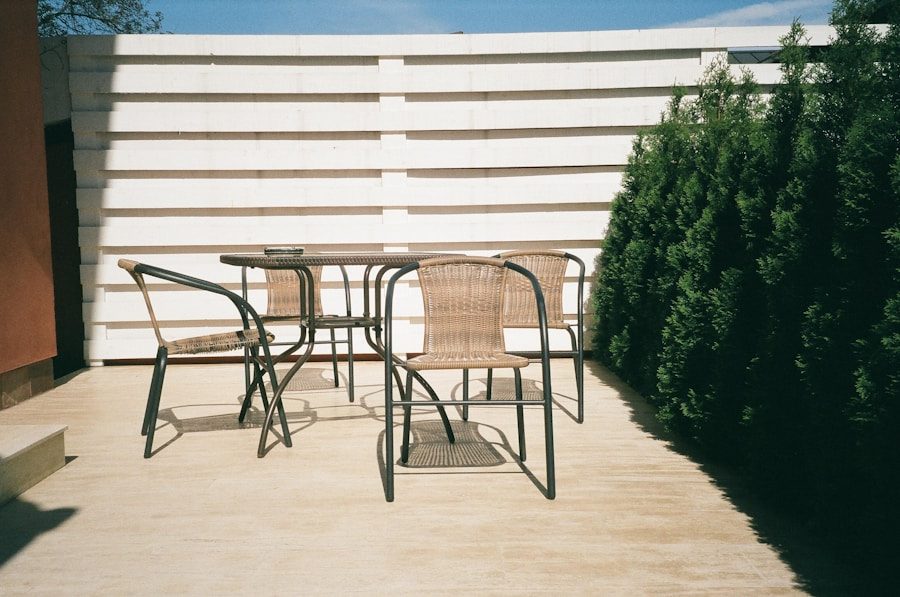
Before you choose pavers, railings, or outdoor chairs, take a few careful measurements. Good measurements help you avoid drainage issues, cramped layouts, and step designs that feel uncomfortable every time you use them.
Start With the Drop From the Door
The first number to get right is the height difference between your back door threshold and the yard below. That single measurement affects almost everything else, including whether you require one step, a full run of steps, or a raised terrace with a short transition down to the lawn.
Measure from the top of the threshold to the finished grade where you want the terrace to sit (not to rough dirt that may change later). If the yard slopes, take measurements at multiple points.
A small terrace feels much better when the transition from the door is comfortable and safe. A drop that looks minor at first can turn into a clumsy first step once you add pavers, edging, or a base layer.
Decide How Much Room You Really Need
A terrace right outside the back door should feel like a landing first and a destination second. That means it requires enough depth for the door to open freely and enough space for a person to step out without landing in the middle of a chair leg or grill.
For a simple coffee spot, you may only need room for two chairs and a small table. For a family-friendly setup, you may want enough space for a bench, planters, or a compact dining set.
Tape the shape out in the yard before you commit. Painter’s tape works on an existing slab, and marking paint or stakes work in grass. That quick mock-up makes it easier to see whether the terrace feels welcoming or too tight.
If you are still shaping the rest of the yard, our guide to a budget backyard makeover is a helpful reminder that a small outdoor project can grow quickly once you start solving one problem after another.
Think About Drainage Before You Think About Decor
A terrace that holds water never feels finished. Even a pretty setup loses its charm when puddles sit near the door, or water runs back toward the house.
Check which direction the ground already slopes. Then think about where rainwater will move after you add a hard surface. You want the finished terrace to send water away from the house, not trap it along the foundation.
Measure for Steps Early, Not at the End
Homeowners often treat steps as an add-on. The smarter move is to plan them from the start.
A terrace outside the back door feels most natural when the step layout works with the house rather than against it. That means looking at the full rise, the available run, and the width of the path into the yard before the build begins.
A simple stairs calculator can help you test comfortable options before you settle on the final layout. Even for a compact terrace, that planning step makes a big difference in how safe and balanced the finished space feels.
If children, older relatives, or frequent guests will use the terrace regularly, comfort matters just as much as appearance. A terrace can look beautiful and still feel annoying if every trip in and out of the house starts with an awkward step.
Estimate Base Material Before You Price the Finish
Surface materials get most of the attention, but the hidden base is what makes a small terrace last. Gravel, crushed stone, sand, and compacted fill all affect how stable the finished surface feels over time.
That is why it helps to know the rough depth of your base and the full area of the terrace before you compare pavers, concrete, or stone. Ordering too little can delay the job. Ordering too much can stretch the budget for no real reason.
A cubic yard calculator makes it easier to estimate how much material you may need for the base layer before you start calling suppliers. That one number can save a surprising amount of guesswork.
Plan Power Before Furniture Goes In
A small terrace becomes much more useful when it supports how you actually live. You may want string lights, a small fridge, a ceiling fan under an overhang, a compact electric grill, or a portable heater for cooler evenings.
Those features are easiest to plan before you finish the terrace. Once furniture, pots, and outdoor rugs are in place, electrical upgrades usually feel more expensive and more disruptive.
A kVA to amperage calculator can help you think through electrical load when you start comparing outdoor appliances or comfort features. That quick check is especially helpful if you are trying to avoid overloaded circuits and messy last-minute extension cord habits.
Keep the Terrace Connected to the House
A terrace looks more settled when it feels like part of the home instead of a separate patch in the yard. That connection can come from matching colors, repeating trim tones, or choosing materials that suit the house’s age and style.
Scale matters too. A tiny back door can look overwhelmed by an oversized platform. On the other hand, a terrace that is too small can feel accidental instead of intentional.
If your house has older details, weathered brick, or a mix of old and updated finishes, our guide on refreshing an older home’s outdoor space is a good place to gather ideas. That approach helps outdoor updates feel more in step with the house.
Leave Room for the Everyday Details
The most successful terraces support real life. Think about where muddy shoes will land, where the dog comes in, where groceries get set down, and how the door swings when your hands are full.
You may want room for a slim bench, a planter to soften the edge, or a mat to catch dirt before it reaches the kitchen. Those small choices often matter more than one extra decorative feature.
A terrace that handles ordinary moments well will get used far more frequently than one that only looks nice in photos.
A Small Terrace Can Do a Lot
A terrace outside the back door does not need a huge budget or a dramatic design to improve your home. It just requires the right measurements in the right order.
Start with the drop from the door, the size you really require, the drainage plan, the step layout, the base materials, and the electrical needs. Once those pieces make sense, the fun decisions feel easier, and the finished space feels like it belongs there.
FAQs
How big should a small terrace be outside a back door?
The right size depends on how you plan to use it. A simple landing for stepping out and setting down groceries can stay compact, while a terrace for dining or lounging requires more depth and width.
Should I use steps for a small terrace?
If the drop from the door to the yard is more than a minor change in height, you should plan the steps early. A comfortable step layout makes the terrace safer and easier to use every day.
Should I plan lighting before I build the terrace?
Yes. Early planning yields cleaner results and greater flexibility. It is much easier to think through outlets, lighting, and small outdoor appliances before you finish the surface.