
My shed is a plastic box. It cost about four hundred dollars, it holds a mower and a leaf blower, and the door has never closed properly since the day we assembled it.
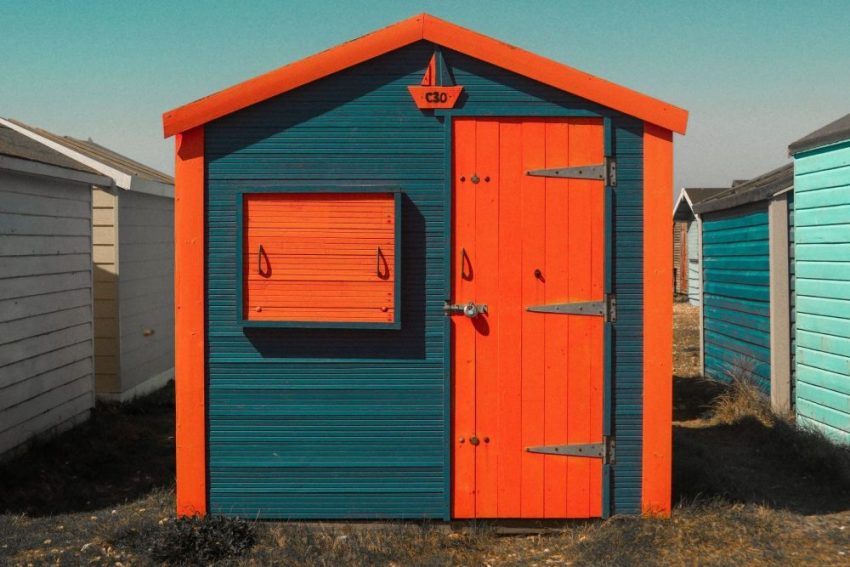
I had never questioned this. A shed is where you put things you do not want in the garage. That is what a shed is.
Then I spent an evening going down a rabbit hole of Australian backyards, and it turns out we have been thinking about this completely wrong.
In Australia, the Shed Is a Room
The difference is not size, though the size difference is considerable. It is purpose.
An Australian backyard shed is frequently a workshop, a studio, a home gym, or the place where somebody restores a motorbike. It has a concrete slab, power, insulation, and a door you can walk a lawnmower through without turning it sideways. People spend time in there deliberately.
This is not a niche hobby. It is embedded enough in the culture that it produced an actual social movement.
The Men’s Shed concept, a community workshop where people gather to build things together originated in Australia and is well established there, and has since spread to the UK, Ireland, Canada and New Zealand.
Research from Australia’s national vocational education research body found these sheds achieve positive health, happiness and wellbeing outcomes for participants and their families, and are particularly successful at reaching older men who conventional health and education programs struggle to engage.
Think about what that means. A country took the backyard shed so seriously that it became a recognized public health intervention.
Meanwhile mine holds a broken hose reel.
Why the Best Backyard Sheds Are Built Like Buildings
Here is where the construction difference matters, and it explains why theirs get used and ours get ignored after the first summer.
Australian backyard sheds are typically steel-framed and clad in coated steel sheeting, engineered to a specified wind rating for the site, and installed on a proper concrete slab.
Browse their top supplier Sheds.com.au and their guide to the best sheds reads less like a garden catalog and more like a spec sheet, with eave heights, door widths, slab requirements and wind ratings listed as standard information rather than upgrades.
That framing is the actual insight. They are buying a small building. We are buying a container.
The practical differences that follow:
Height. Standard eave heights of around 2.4 meters, roughly eight feet, versus the six-foot-something typical of American backyard kits. You can stand up, hang a light, and install shelving above head height without stooping.
Foundation. A poured slab rather than a few pavers or bare dirt. That single decision determines whether the structure is usable in wet weather, whether the door still lines up in year three, and whether the whole thing lasts a decade.
Doors. Wide roller or double doors sized for equipment rather than for a person carrying a rake at an angle.
Ventilation. Whirlybirds, ridge vents and eave vents specified deliberately, because a sealed metal box in summer is an oven and nobody uses an oven as a workshop.
None of that is exotic or expensive relative to the whole. It is just what happens when you assume the building will be occupied rather than merely filled.
The Evidence This Actually Matters
I went looking for whether the wellbeing claims hold up, because I am suspicious of anything that sounds too tidy.
They mostly do, with caveats. A mixed-methods systematic review of community-based sheds in health promotion for older men assessed the evidence formally, and a separate conceptual review drawing on peer-reviewed literature from 1990 to 2018 mapped the likely causal pathways between shed activity and wellbeing outcomes.
That second paper is honest about the limitations. Much of the evidence base is qualitative, from small samples, and self-reported. Nobody has run a large randomized trial on sheds, and nobody is going to.
But the proposed mechanism is intuitive and worth borrowing regardless: a work-like routine, a sense of purpose, a reason to leave the house, and company while doing something with your hands.
You do not need a peer-reviewed paper to recognize that a space you actually want to spend time in is different from a space where you store things.
What I Am Actually Going to Do
I am not building a steel workshop this year. But three things are changing.
Height first. When this shed finally gives up, the replacement is getting a taller wall. Everything else follows from being able to stand comfortably inside.
A real floor. A slab if the budget allows, a proper gravel-and-paver base if it does not. Anything is better than the current arrangement, which is essentially grass with ambition.
Power. Even one outlet and one overhead light transforms what the space can be. That is the difference between a storage box and a workshop, and it costs less than most people assume if the run is short.
And a shift in how I think about it, which is free. I have been treating the shed as overflow, somewhere things go when they stop being welcome indoors. The Australian version treats it as square footage, which is a considerably more useful way to see a structure already sitting unused in your own yard.
The Part I Cannot Copy
Obvious caveat: I am not ordering a shed from Australia, and neither are you.
Wind ratings, slab standards and cladding options are all specified to Australian conditions and Australian codes. Your local permit rules will differ, and in most US jurisdictions accessory structures above a certain footprint require one.
Check that before you order anything. The threshold varies by city and it is usually smaller than people expect.
What travels is the standard. Taller, floored, powered, ventilated, and built to be occupied.
That is the idea I am stealing. The mower can keep living there. It just will not be the only thing that does.