
After digging through what chefs who’ve actually built careers on this sandwich do differently, a few patterns showed up again and again. None of these are complicated. All of them matter more than people think. White pepper instead of black. This one shows up from chefs who’ve spent years perfecting the dish. White pepper has a softer, slightly fermented heat that doesn’t fight with sweet lobster meat the way black pepper’s sharper bite can.
A genuine dash of hot sauce. Not enough to taste spicy, just enough to wake the dressing up. The trick is using a thin, vinegar-based hot sauce rather than anything thick or smoky, so it adds brightness instead of heat.
Capers and tarragon. A professional touch from chefs working seafood-heavy menus: a small amount of finely chopped capers and tarragon alongside the usual celery and lemon. It adds a subtle, almost French bistro note without making the sandwich taste fussy.
Pro Tips
Cook the lobster in butter first, then dress it cold. Warming the meat briefly in butter before tossing it into a light mayo dressing gives you the richness of a Connecticut roll and the bright tang of a Maine roll in the same bite, instead of having to pick a side in that debate. Lemon zest, not just juice. Zest first, then juice. The zest brings the citrus oil that juice alone never captures, and it keeps the dressing from turning watery.
What You’ll Need
For the lobster filling:
- 1 pound cooked lobster meat (claw, knuckle, and tail), roughly chopped
- 2 tablespoons salted butter
- ¼ cup mayonnaise
- 1 small lemon, zested and juiced
- 2 tablespoons finely minced celery
- 1 tablespoon finely chopped chives
- 1 teaspoon capers, finely chopped
- ½ teaspoon fresh tarragon, finely chopped
- A few drops of vinegar-based hot sauce, like Tabasco
- White pepper and kosher salt, to taste
For the rolls:
- 4 New England-style split-top buns
- 2 tablespoons salted butter, softened
How to Make It
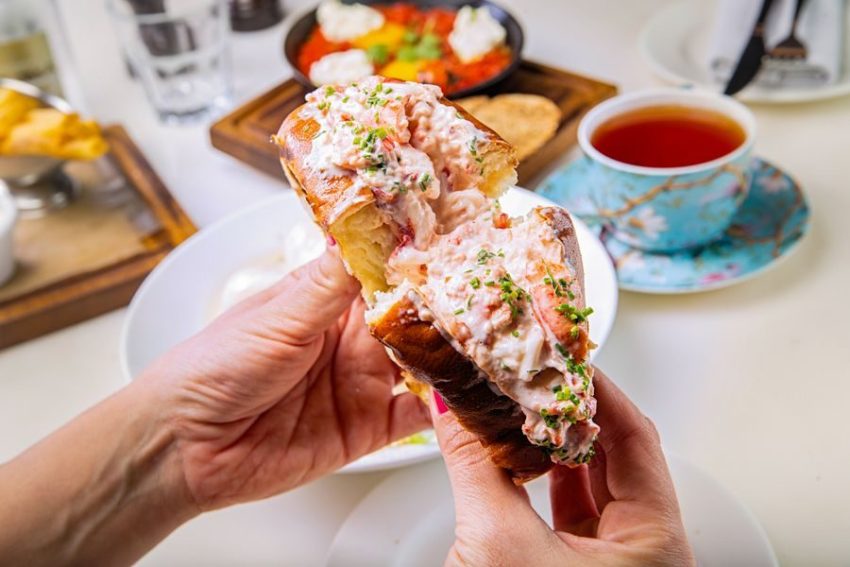
Warm the lobster meat gently in a skillet with the butter for 2 to 3 minutes over medium-low heat, just until heated through. Don’t let it cook longer or it will toughen. Use a slotted spoon to lift the meat out, leaving the buttery juices behind in the pan.
Whisk together the mayonnaise, lemon zest, lemon juice, celery, chives, capers, tarragon, hot sauce, white pepper, and a pinch of salt. Fold in the warm lobster meat until just coated. Taste and adjust the lemon and salt as needed.
Butter the outsides of the split-top buns and toast them in a skillet over medium heat until golden on both sides, about 1 to 2 minutes per side.
Load the buns generously with the lobster mixture. Don’t be shy. The bread should never outweigh what’s inside it.
Where to Buy the Right Bread
True split-top New England buns are worth tracking down rather than substituting at the last minute. Pepperidge Farm makes a split-top bun that’s stocked in most major grocery chains, including Kroger, Publix, and Safeway. If your local store doesn’t carry it, a good bakery counter can usually slice the sides off a standard bun to mimic the flat, griddle-ready surface. Brioche hot dog buns from a bakery section are the best substitute if split-top isn’t available anywhere nearby.
Where to Order the Best Lobster in the World
If you’re nowhere near the coast, or you just want the good stuff without the guesswork, a few mail-order companies consistently come up as the most trusted names in the business.
LobsterAnywhere has been shipping direct from Maine since 1999 and works directly with lobstermen who dock daily, which keeps the meat noticeably fresher than what most grocery stores carry.
Maine Lobster Now ships overnight for free on orders over $150, and their live lobsters consistently get praised for arriving in excellent condition even to landlocked states.
Luke’s Lobster sources sustainably from Maine and Canadian waters and ships nationwide with carbon-neutral overnight delivery, a solid pick if you want frozen meat that holds up well for a roll.
The Lobster Guy has been mail-ordering since 1996 and is frequently cited as having some of the best pricing on larger, 2-pound-plus lobsters.
A good rule of thumb across all of them: order in late summer or early fall when the catch is highest and prices typically dip, and look specifically for hard-shell lobsters, which travel and hold up better than soft-shell.
Do It Yourself: Diving and Lobstering in the US
Florida remains the best lobster diving destination in the United States, with the Florida Keys and the coastline from Miami to Jupiter offering some of the highest lobster populations. The state’s mini-season takes place in late July, followed by the regular season from August through March. On the West Coast, California offers excellent opportunities around Catalina Island, known for its larger lobsters living in rocky kelp beds, as well as the Channel Islands near Santa Barbara, which are considered some of the state’s top lobster hunting grounds. Popular spots around San Diego include Zuniga Point, La Jolla, and Point Loma, especially during the October season opener.
Along the East Coast, Maine is famous for its American lobster fishery, with many visitors experiencing the industry through lobster boat tours departing from towns such as Rockport, Stonington, and Boothbay. Massachusetts also offers productive lobster diving around Rockport, Nahant, Gloucester, and Buzzards Bay. Farther south, North Carolina‘s Outer Banks feature offshore wrecks and ledges that can hold spiny lobster and typically see fewer divers than Florida. Rhode Island‘s Block Island and Narragansett Bay are among the state’s best-known lobster locations, while Connecticut‘s rocky points and pier pilings in Long Island Sound provide excellent lobster habitat. Virginia Beach occasionally produces spiny lobster around offshore wrecks and ledges. In Hawaii, spiny lobsters can be found around reef systems on most major islands, though strict seasonal and harvest regulations apply.
Legendary Names in the Lobster World
A few companies and people have built near-mythic reputations in the industry. Luke’s Lobster, founded by Luke Holden, took a Maine fishing-family operation and turned it into one of the most recognized lobster brands in the country. Get Maine Lobster and LobsterAnywhere both built their names on direct-dock relationships with independent lobstermen rather than large-scale wholesalers. And if you’ve ever seen the Discovery Channel’s lobster fishing coverage, you’ve likely seen Captain Tim Curt of LobsterGuy.com, one of the more recognizable faces in the mail-order lobster world.
The Best Lobster Rolls in the Country Right Now
Here’s where to go if you want to taste how the pros do it.
- Red’s Eats — Wiscasset, Maine
- Bob’s Clam Hut — Kittery, Maine
- The Clam Shack — Kennebunkport, Maine
- Eventide Oyster Co. — Portland, Maine
- Abbott’s Lobster in the Rough — Noank, Connecticut
- Lobster Landing — Clinton, Connecticut
- Ford’s Lobster (Haring’s Noank) — Noank, Connecticut
- Neptune Oyster — Boston, Massachusetts
- James Hook & Co — Boston, Massachusetts
- Woodman’s of Essex — Essex, Massachusetts
- Mama’s on the Half Shell — Baltimore, Maryland
- The Ordinary — Charleston, South Carolina
- Luke’s Lobster — New York City
Lobster meat is just as good in a rich bisque, folded into mac and cheese, tossed into tacos with a bright slaw, or stirred through a simple cream pasta, so don’t feel locked into the roll. If you want to go bigger, the largest lobster ever recorded weighed 44 pounds 6 ounces, caught off Nova Scotia in 1977, though companies like Maine Lobster Now and James Hook & Co. now sell live jumbo lobsters up to 20 pounds with roughly 4 to 5 pounds of usable meat, enough for about 16 to 20 lobster rolls…