
A home doesn’t need a full-scale remodel to feel fresh. Small changes, like swapping hardware, updating doors, or adding texture, can shift the entire feel of a space without the timeline or budget of major construction.

For example, replacing hollow core doors with oak interior doors adds immediate warmth and texture through visible grain patterns. Updated cabinet and door hardware can refresh the kitchen and bathrooms for under $200. Adding crown molding or baseboards creates architectural detail, while painting accent walls can anchor spaces without touching the rest of the room. For more budget-friendly upgrades that don’t require professional help, check out these affordable home improvement ideas.
Introduce Architectural Elements That Feel Permanent
Crown molding and baseboards frame a room and add definition where walls meet ceilings or floors. Not only are they relatively simple to install, but they make flat surfaces feel more finished. Wider baseboards work well in rooms with higher ceilings. Crown molding adds elegance to living rooms, dining rooms, and primary bedrooms.
On the other hand, installing ceiling beams can introduce visual weight overhead. Faux beams made from lightweight materials can be installed quickly to create the look of exposed wood without structural work. These work great in spaces with vaulted or higher ceilings, where the vertical room allows the beams to stand out.
You can add texture to the lower half of the walls with wainscoting. This protects high-traffic areas like hallways and dining rooms while breaking up large expanses of paint. Board-and-batten or raised-panel styles lend traditional character, while flat-panel wainscoting seems more contemporary.
You can soften the transition between rooms with arched doorways. All you need is framing and drywall to convert a standard rectangular doorway into an arched one. This can shift the home’s overall aesthetic toward a more “custom” look.
That said, built-in shelving will turn unused wall space into functional storage. Floor-to-ceiling units flanking a fireplace or filling an alcove add both utility and a sense of permanence. Paint them the same color as the walls for a seamless look, or use contrasting tones to make them stand out, instead.
Swap Out Hollow-Core Doors for Natural Wood Options
Interior doors rarely get attention during renovations, but they’re one of the most-used elements in a home. Hollow core doors are lightweight shells filled with cardboard honeycomb, making them budget-friendly but not great for sound insulation. Solid wood doors, especially oak interior doors, provide immediate visual appeal, on top of better sound insulation that hollow core versions can’t match.
Oak doors offer natural aesthetic appeal, durability, and timelessness. This is why they are often favored by designers and architects, as they enhance the character of any home, adding a unique spin to both the exterior and interior architecture.
Additionally, oak works great across multiple design styles. For example, in farmhouse interiors, it reinforces the natural, lived-in feeling. The more traditional spaces benefit from the classic grain and warm tones, while Scandinavian interiors often pair oak with lighter palettes for contrast. Modern homes use oak as a grounding element against cleaner lines and neutral walls.
Two of the most common choices are the white and red oak. White oak provides a much cooler, more uniform grain with less prominent red or pink undertones. On the other hand, red oak shows warmer hues and more pronounced grain variation. Regardless, both are durable and age well. It’s all a matter of preference and style.
Make sure to consider different finish choices. For example, a natural or clear-coated finish allows the grain to show through and keeps the look lighter. The stained finish will deepen the color and can shift the tone to amber, espresso, or walnut, depending on the stain. Regardless, either option works well; it all depends on whether you want the doors to blend with existing wood tones or stand as a contrasting element.
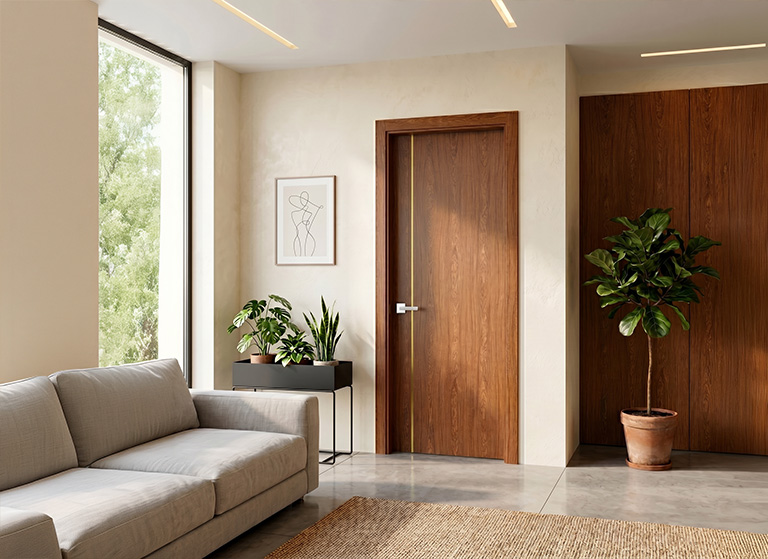
Upgrade Hardware and Fixtures
Although hardware gets touched constantly, it never gets attention until it is visibly dated. By simply swapping cabinet pulls, door handles, and hinges, you can easily refresh a space without any structural work.
Matte black hardware works well in modern and transitional interiors. It provides a clean contrast against light cabinetry and doors, and it doesn’t show fingerprints. To bring warmth to your home, aged brass pairs well with natural wood tones and softer palettes. The patina gives it a less manufactured look than polished finishes.
Many homeowners opt for lever handles instead of knobs because they are much easier to use, especially when your hands are full. Knobs work well in traditional settings or on cabinets, to keep everything a lot more subtle. Hinges should match the rest of the hardware. Just keep in mind that if you are switching to black handles, the hinges should follow. The same applies to light fixtures. Coordinating finishes across door hardware, cabinet pulls, and lighting ties the room together.
Build Character with Materials and Vintage Aesthetics
Adding natural textures will bring depth into any space. For example, linen curtains, throws, or upholstery soften “hard” surfaces. Stone can add weight and contrast against wood and painted surfaces. You can use wood accents, such as floating shelves or picture frames, to introduce warmth without committing to large furniture pieces.
In most cases, vintage furniture brings character that new places often lack. A mid-century dresser or an older dining table makes the interior look a lot more interesting. Antique mirrors, especially those with aged glass or ornate frames, are also a great choice to add character to plain walls. Reclaimed wood, whether as shelving or mantels, brings texture and a sense of history. Keep in mind that decorative statements do not have to be expensive. Simple flea market finds, such as brass candle holders, worn leather trays, or old wooden stools, work well as accent pieces.
Additionally, try to layer textures to prevent a boring aesthetic. Pair smooth surfaces like glass or metal with rougher ones like woven baskets, jute rugs, or unfinished wood. It’s all about balance: pair vintage pieces with cleaner, modern furniture to keep the space from feeling cluttered.
Add Depth with Paint and Architectural Details
All-white walls often feel boring or “sterile” without contrast or texture. You could opt for warm whites with cream or beige undertones for a softer look that can make spaces feel more inviting. Earth tones like terracotta, ochre, and clay are a great choice and pair well with natural wood finishes.
Muted greens and blues like sage, olive, and dusty blue are ideal for accent walls or in smaller rooms. If you prefer texture and dimension, choose limewash finishes that create subtle variations in tone that shift with light throughout the day.
Accent walls work best when they highlight architectural features like fireplaces, alcoves, or the wall behind a bed. A single bold wall draws the eye without overwhelming the room. You could also use wallpaper as an accent wall, which adds pattern and depth. Textured wallpapers with subtle prints and grasscloth finishes bring dimension that flat paint can’t match.
Conclusion
Upgrading your interior spaces does not require tearing down walls or months of construction. Even one intentional change can shift how a home feels. For example, replacing hollow core doors with oak interior doors alone introduces warmth to the space. The grain patterns, the weight of solid wood, and the way natural materials age over time all contribute to a more aged, lived-in aesthetic that hollow core doors simply can’t deliver.
Small changes are sometimes enough. For example, adding updated hardware, a few natural materials, or a coat of paint in the right tone, and the transformation is immediate. The key is choosing upgrades that align with your home’s overall aesthetic. Start with one room, one element, and build from there!