
These DIY Painted Sugar Skull Masks are the perfect Halloween or Day of the Dead Activity to do with your kids!
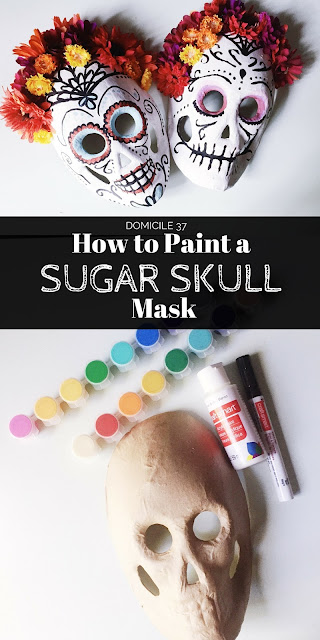
Materials:
- Paper mache skull mask from Amazon or Michaels
- Paint
- Small paint brush AND thin fine point paint brush
- Black oil paint marker or a regular sharpie marker will do
Steps:
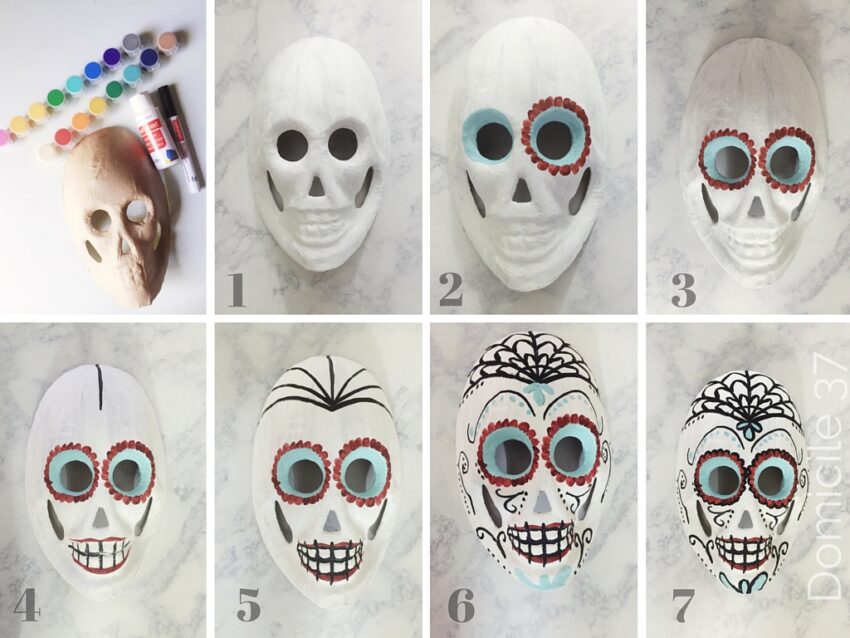
- Paint mask white and allow it to dry with your regular paint brush. Do not apply thick layers of paint on skull or it will take longer to dry. Paint with an even consistency.
- Paint around eye sockets in desired color
- With you fine point paint brush make pedal like brush strokes around the painted eye sockets.
- Add your details to the mouth. Outline the teeth with either your black marker or use black paint. You can even add lips to your skeleton.
- Add details to your skull’s forehead. You can make spider webs, swirls, whatever you like.
- Add more detail on the face to fill in the space. Feel free to put a little color on the face or even rhinestones.
- With your black marker or black paint and the fine thin paint brush outline the colored detail on your skeleton.
You can stop here or you can go a step further and add fake colorful flowers to your sugar skull and create a headdress by hot gluing the flowers on top of the skull.

What are Sugar Skull Masks and What Do They Represent?
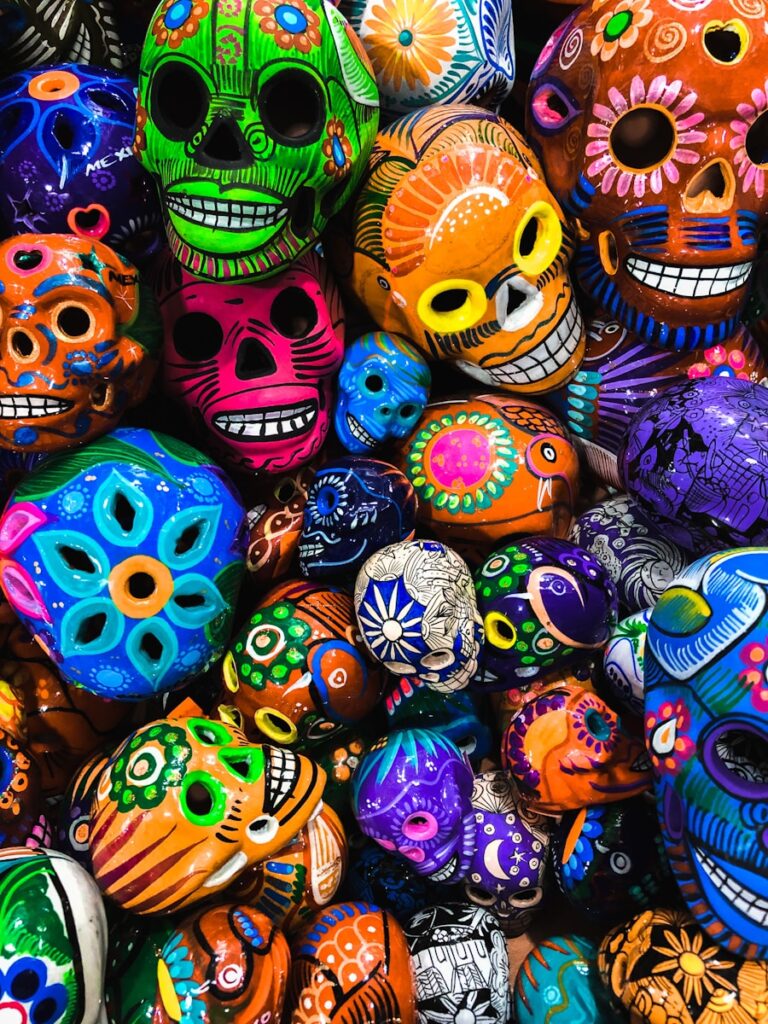
Painted sugar skull masks are a colorful and symbolic element of the Mexican celebration known as Día de los Muertos, or Day of the Dead. These masks, often vibrant and intricately decorated, are inspired by the calaveras (skulls) made of sugar, which are traditional offerings used to honor the deceased during the festivities.
Origins and Significance
The tradition of sugar skulls and by extension, painted sugar skull masks, has its roots in both indigenous Mexican culture and European influences, particularly from Spanish colonialism. The indigenous people of Mexico had practices of honoring their deceased ancestors with rituals and offerings, which included keeping skulls as trophies and displaying them during rituals to symbolize death and rebirth.
When the Spanish colonized Mexico in the 16th century, they introduced their own traditions of All Saints’ Day and All Souls’ Day, celebrated on November 1st and 2nd respectively. Over time, these Christian holidays blended with the indigenous traditions to form the modern Día de los Muertos, where families come together to remember and celebrate the lives of their departed loved ones.
Sugar Skulls and Masks
The sugar skulls are typically crafted from a mixture of sugar, hot water, and lime, molded into the shape of a skull and decorated with items like colored foil, icing, beads, and feathers. These skulls often feature smiling faces and ornate designs to reflect a joyful and positive view of death, celebrating the life of the individual being remembered.
Painted sugar skull masks carry the same festive and artistic expression, designed to be worn or displayed during the celebrations. These masks are usually made from various materials like paper-mâché or clay and are elaborately painted and adorned to mimic the decorative style of the sugar skulls.

Cultural Impact
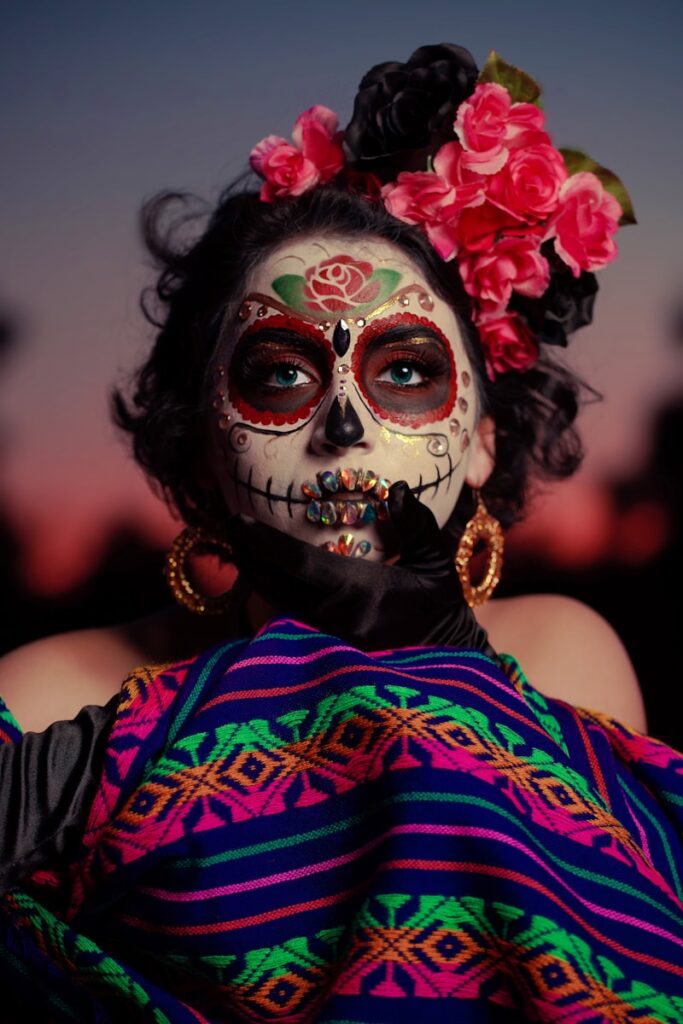
Today, painted sugar skull masks are recognized worldwide as a symbol of Mexican culture and Día de los Muertos. They are used in parades, worn during festivities, and displayed as part of altars and decorations. They serve as a reminder of the cyclical nature of life and death and the importance of remembering and honoring the spirits of ancestors.
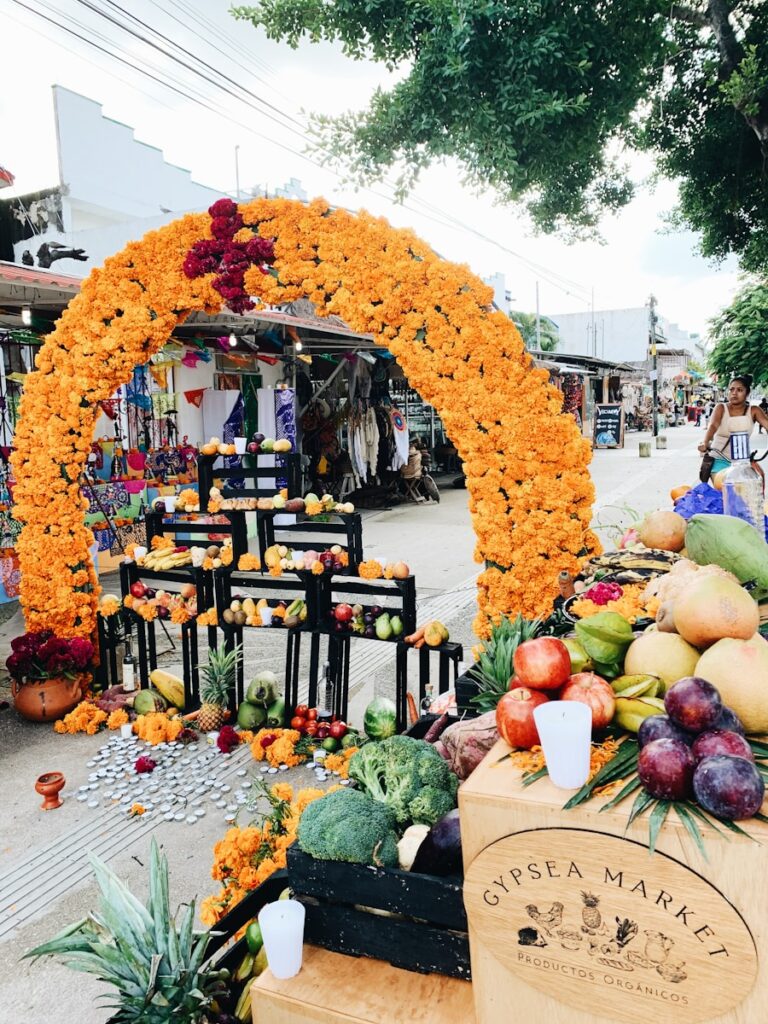
In addition to their cultural significance, these masks have also influenced popular culture and art globally, appearing in fashion, films, and artworks, symbolizing a celebration of life and a respectful acknowledgment of death.
What’s the best way to educate kids about Día de los Muertos?
Educating kids about Día de los Muertos (Day of the Dead) can be both educational and enriching, providing them with a broader understanding of cultural diversity, historical customs, and the universal themes of life and death. Here are some effective ways to introduce and teach children about this meaningful celebration:

Storybooks:
Start with children’s books that introduce the Day of the Dead in a way that’s engaging and appropriate for their age. Books like “Funny Bones: Posada and His Day of the Dead Calaveras” by Duncan Tonatiuh or “Day of the Dead” by Tony Johnston and Jeanette Winter can provide colorful and insightful narratives.
Arts and Crafts:
Engage children with hands-on activities such as making papel picado (cut paper decorations), painting sugar skull masks, or creating their own altars with marigolds, photos, and favorite items of loved ones who have passed. These activities help children connect with the holiday’s traditions creatively.
Cooking Traditional Foods:
Involve kids in preparing traditional dishes that are commonly made for Día de los Muertos, like pan de muerto (bread of the dead), tamales, or sugar skulls. Cooking offers a tasty, hands-on experience of the celebration.
Music and Dance:
Share traditional Mexican music and dance that are part of Día de los Muertos festivities. You might show them videos of parades and music performances, or even learn a dance together.
Discussing the Themes:
Have open discussions about the themes of the holiday, such as the cycle of life and death, the way we remember those who have passed, and the unique customs of different cultures when it comes to honoring ancestors.
Visit Cultural Exhibits:
If possible, visit a museum or cultural center with a Day of the Dead exhibit. Many places host special events or art installations that showcase altars, traditional art, and other customs associated with the holiday.
Multimedia Resources:
Utilize documentaries or educational videos that explore Día de los Muertos. This can visually and vividly explain the significance of the traditions and activities associated with the holiday.
Community Events:
Participate in local Día de los Muertos events if they are available. Many communities, especially those with large Hispanic populations, host parades, festivals, and workshops that can offer a first-hand experience of the celebration.
By combining these educational tools and experiences, you can provide a rich, engaging, and respectful exploration of Día de los Muertos, helping children appreciate its cultural significance and universal themes.
I love sugar skulls! These two look great, I’m loving all the colors you used.
This are SO great. I wanna make one!!! The flowers are the icing on the cake!
These are beautiful! You are so crafty!
Pinning!
thank you for pinning!
This is amazing! You are crazy talented to do this freehand!