
If you’ve ever walked into a house that felt more like a hotel room than a home, chances are the walls had something to do with it. Flat, builder-grade paint does a job — it covers drywall — but it rarely tells a story. Wallpaper does. It’s one of the fastest ways to take a house that feels generic and make it feel like yours, without touching a single wall’s layout or spending a renovation-sized budget.
Why Families Are Rediscovering Wallpaper
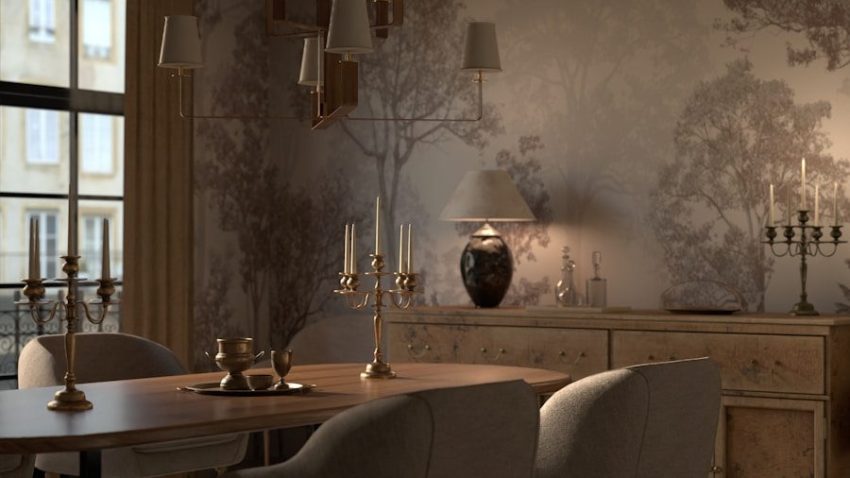
For a while, wallpaper had a reputation problem — most of us remember peeling it off a grandparent’s dining room at some point. But today’s wallcoverings are a different world entirely. Peel-and-stick options make small updates approachable for a weekend project, while grasscloth, textured vinyl, and mural-style papers can turn a single accent wall into the room’s focal point. Families are leaning into it for nurseries, playrooms, staircases, and powder rooms — the spaces where a little personality goes a long way.
Where Wallpaper Makes the Biggest Difference
A few spots consistently deliver the most impact for the least disruption:
- Entryways and stairwells — the first thing guests see, and often the most overlooked
- Powder rooms — small enough that bold pattern feels intentional, not overwhelming
- Kids’ rooms — a playful, removable option that grows with (or gets swapped out for) your child
- Accent walls in living or dining rooms — a change of scenery without a full room redo
The trick is choosing a wallcovering that matches both the room’s function and its moisture, light, and traffic conditions — grasscloth in a steamy bathroom, for instance, is a common and avoidable mistake.
DIY vs. Calling in a Pro
Peel-and-stick papers have made small DIY projects genuinely doable for a lot of families, and there’s real satisfaction in tackling an accent wall yourself on a Saturday afternoon. But traditional wallcoverings — vinyl, grasscloth, natural fiber, or anything with a pattern repeat — get unforgiving fast. Seams show, patterns misalign, and a single air bubble can be the difference between a wall that looks custom and one that looks like a first attempt.
That’s usually the point where it makes sense to bring in help. If you’re in the Denver metro area and weighing DIY against hiring out, it’s worth getting a quote from professional wallpaper installers in Aurora, CO before committing to a large or pattern-heavy room — a short consultation can save you from a costly redo, especially with higher-end or natural fiber materials that don’t forgive mistakes.
A Few Things to Ask Before You Start
Whether you DIY or hire it out, a little planning goes a long way:
- Measure twice. Wallpaper is sold by the roll, and repeats matter — order too little and dye lots may not match on a reorder.
- Check your walls first. Texture, old paint, and moisture all affect how wallpaper adheres and how long it lasts.
- Think about the room’s future. A bold pattern in a nursery is charming now — will it still work in five years, or is peel-and-stick the smarter call?
- Don’t skip prep. Most wallpaper failures trace back to skipped wall prep, not the paper itself.
The Takeaway
Wallpaper is one of the rare home updates that changes how a room feels without changing its footprint. Start small — one wall, one hallway, one powder room — and see how much personality a good pattern can bring back into a space that paint alone never quite finished.
And if you’re still on the fence about DIY versus hiring out, it doesn’t hurt to at least talk it through with someone who does this for a living. Most certified Denver metro wallpaper installer teams will walk you through material options and wall prep for free before you buy a single roll — which can save you from guessing on a project you only want to do once.