
There are about 7 million Americans suffering from Alzheimer’s disease in the year 2025, according to the Alzheimer’s Association. And many people with dementia who have problems with wandering are not aware of the dangers.
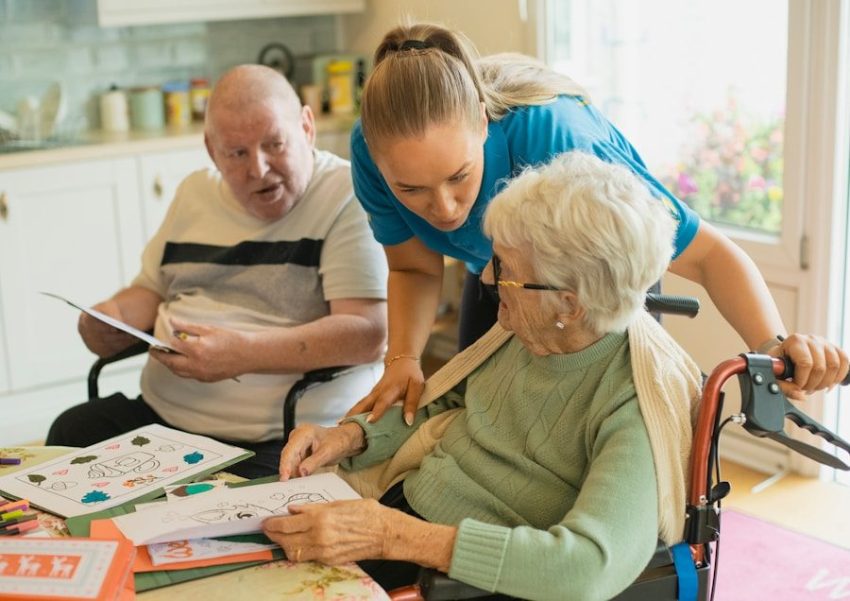
North Carolina nursing home elopement lawyer Thomas Pleasant and the firm’s overview say nursing homes are entrusted with the safety and well-being of some of the most vulnerable members of society. One serious risk these individuals face is elopement, where they leave the facility unsupervised, often wandering into dangerous situations.
The research that aimed at studying such cases revealed that one-third of the mentioned elopements end in death, with this figure rising to 54% if the person is not discovered within 96 hours. Such information does not seem unusual. Most cases of elopement occur due to neglect and could have been avoided if safety measures were properly implemented.
So learning about the reasons, dangers, and liabilities in connection with nursing home elopements will allow you to determine whether the institution provided a good standard of care.
What Nursing Home Elopement Actually Means
What does it mean when someone “elopes” from a nursing home? Elopement is defined in a nursing home as the unobserved and unauthorized departure of a resident from the institution.
Contrary to wandering, which refers to the movement within the premises, elopement entails crossing a boundary, like the exit doors, gates, or any other areas where a patient exits into an unsupervised environment.
It is possible to experience elopement even if there is a reason to leave the place, especially in the case of patients with dementia who leave searching for their families. Dementia affects one’s ability to understand certain situations and protect oneself.
Based on the Washington Post article of 2023, over 2,000 patients had already moved out of assisted living and memory care facilities, and many of them had been severely injured or even died from their experiences in such facilities.
Why Elopement Happens: The System Failures Behind the Incident
Elopement is not the result of one cause alone. Elopement happens when there is a vulnerable resident and an unsafe facility without appropriate risk prevention techniques. Here are a few reasons for elopement:
- Inadequate staffing: Insufficient staff leads to at-risk patients not having proper supervision, resulting in potential elopements.
- Exit alarms malfunctioning: Exit alarms can be used to track elopements. This safety practice becomes ineffective if alarms fail or are disabled.
- Lack of risk assessment and care planning: A risk assessment should be conducted for the risk of elopement in facilities. Failure to do so is a clear sign of neglect.
- Environmental safety issues in facilities: Unsecured exits and facility layout disorient vulnerable patients, making it easier to elope.
The Federal Legal Framework: What Facilities Are Required to Do
Those nursing institutions that are funded through Medicare or Medicaid programs are obliged to observe the regulations as prescribed by the Omnibus Budget Reconciliation Act of 1987 (OBRA). The regulations are made obligatory by the Centers for Medicare & Medicaid Services (CMS). The reason for that is that the regulations are statutory and not mere guidelines.
42 CFR § 483.25 requires that nursing facilities make sure there is sufficient supervision and assistance to prevent accidents. They should provide residents with a safe environment free from preventable hazards.
What OBRA Requires in Practice
Before a resident known to wander can elope, the facility should already have:
- Finished a broad evaluation, basically mapping out the resident’s chance to wander off or elope
- Added that risk into the resident’s Minimum Data Set (MDS) assessment, so it shows up there clearly
- Built a personalized care plan with specific actions like alarm systems, monitoring routines, secured unit placement, or other strategies that match the resident’s condition
- Reworked and updated the plan when the resident’s condition changed, even if it was subtle
CMS treats elopement as a major noncompliance issue. Facilities that get cited for breakdowns related to elopement can end up dealing with fines, mandatory corrective measures, denial of new admissions, and, in more severe situations, losing Medicare and Medicaid certification.
Legal Liability After an Elopement Incident
In cases where a patient eloped and got injured in a nursing home, the law will determine if the facility was aware of the dangers and if it took all necessary precautions to prevent it.
It is important to note that failure to observe OBRA regulations will not be considered an act of negligence but will be used as proof that the standard of care expected from a facility was breached.
- Some of the claims that families can file include:
- Negligence: A facility fails to take care of the patient or provides necessary security measures, hence causing injury or death to the patient.
- Wrongful death: Family members can file a lawsuit for wrongful death caused by elopement.
- Contract breach: In case a facility fails to offer promised services, a breach of contract lawsuit will be filed.
The reaction of the facility in case of elopement of the patient is also crucial. Delaying the search for the resident, contacting the necessary agencies, and informing the family will lead to serious complications.
What Families Should Do Immediately After an Elopement
In the first few hours after a resident elopes from a nursing home, it is important to handle the emergency situation, as well as collect evidence.
The families will have to ask the facility to conduct a search and ensure that the time when the resident was last seen, the doors that were searched for him or her, and any alarm sounds are documented.
Family members also need to call the police immediately and give them details like the picture of the resident, physical description of him or her, clothes he or she was wearing, illnesses, and probable places he or she will visit.
After the emergency situation has been dealt with, the family members need to collect all the necessary documents. These are the care plan, assessment, incident reports, staff report, and wandering documentation. These documents can be essential in legal proceedings.
Elopement Is Preventable. Negligence Is Actionable.
Every single case of nursing home elopement that results in harm done to the person poses the question about the facility having complied with the laws regarding its responsibilities to ensure the safety of its residents.
In fact, there are quite clear requirements put forward by the federal government in regard to patient safety, and, when it comes to a situation of a high-risk patient leaving the facility without proper safety measures being in place, the difference between what was supposed to be done and what was actually done becomes rather telling evidence.
Families dealing with nursing home elopement deal not only with money and personal issues but also with certain legal responsibilities.