
Every year around mid-November I get ambitious. I pull out the spice jars, I find the recipes I saved last December and never made, and I decide this is the year my kitchen smells like a German Christmas market.
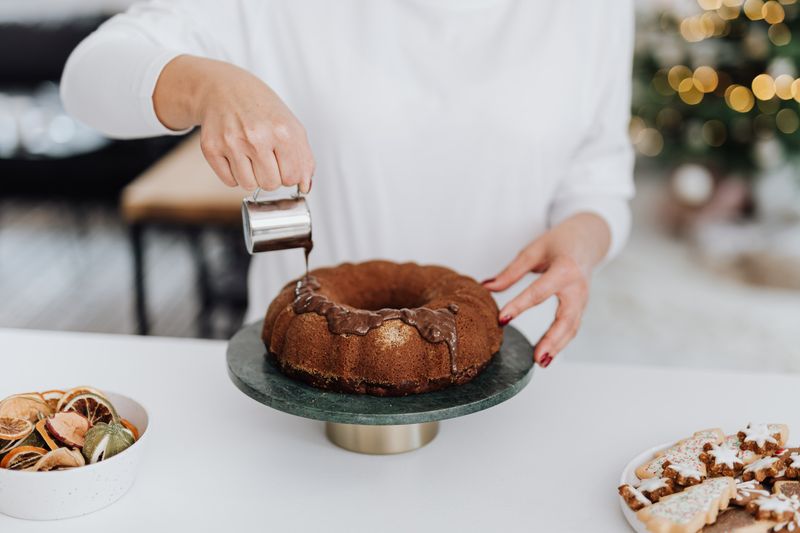
Every year I get close. And every year there is a gap I cannot close, no matter how good the recipe is.
After about five seasons of this, I finally sat down and worked out exactly where I keep losing. Here it is, round by round.
Round One: The Atmosphere I Am Trying to Bottle
Let me start with what I am actually competing against, because I do not think I understood the scale of it until I looked into it properly.
Dresden’s Striezelmarkt has been running since 1434. Not 1934. Fourteen thirty-four. It is generally considered Germany’s oldest Christmas market, and it takes its name from the Striezel, the old word for the loaf we now call Stollen.
Nearly six hundred years of practice. I have five.
The German National Tourist Board notes that the Striezelmarkt and the Dresden Christstollen share a common history that continues to this day, with the market literally named after the bread. That is a level of integration between a place and a recipe that my kitchen cannot manufacture. My kitchen is named after nothing.
Verdict: lost, and not close.
Which Is When I Started Reading About European Christmas Market Cruises
Here is the point where this stopped being a baking problem and turned into a travel one.
If the thing I am chasing is not really a recipe but a place, then the sensible move is to go to the place. The complication is that the markets I most want to see are not in one city. They are strung along the Rhine and Danube, a few hours apart, each with its own specialty.
That is why Celebrity Cruises’ seasonal river sailings kept coming up while I was researching. They run along those rivers during market season and dock within walking distance of the market squares, so you see several markets across one trip without repacking a suitcase in four different hotels.
For someone whose entire interest is comparative, tasting the same thing done differently in different towns, that structure makes far more sense than picking one city and hoping it has everything.
I have not booked it yet. But it is the first plan that actually addresses the real problem instead of the symptom.
Round Two: The Stollen
Back to the kitchen, and to my most humbling annual defeat.
My stollen is fine. Genuinely fine. It is also not the same product, and there is a legal reason for that.
Dresdner Christstollen holds protected geographical indication status in the European Union, which means only bakeries in and around Dresden, following the defined method, can call their loaf by that name. The protection covers the place, the process, and the standard.
You cannot buy that. There is no substitute ingredient for six centuries of a city refining one loaf and then legally defending it.
What I can do is get closer. Real butter, no shortcuts. Actual marzipan rather than almond paste. And the part I always rush and should not: letting it sit for at least two weeks before cutting, wrapped properly, so the flavor settles.
Verdict: lost, but improving.
Round Three: The Lebkuchen
This one stings more, because I thought gingerbread was the achievable one.
Nürnberger Lebkuchen is also a protected product, and the top grade, Elisenlebkuchen, carries strict compositional requirements including a high proportion of nuts and a very low proportion of flour. Some versions contain almost no flour at all.
That last detail changed how I bake it. I had been making a spiced cookie. They are making something closer to a nut confection that happens to be spiced, which is why the texture I kept failing to match was never going to come from adjusting the ginger.
More ground almonds and hazelnuts, less flour, and Oblaten wafers on the base if you can find them. That single change got me the closest I have ever been.
Verdict: lost, but I finally understand why.
Round Four: The One I Am Never Going to Win
Here is the honest one.
The reason a market smells the way it does is that a hundred stalls are producing food simultaneously in cold outdoor air, next to woodsmoke, roasting almonds, mulled wine steam, and pine. That smell is a byproduct of density.
My kitchen has one oven and one person. I can make the individual smells. I cannot make them happen at once, outdoors, in the cold, at scale.
I spent an embarrassing amount of time trying anyway. Simmering a pot of glühwein on the stove while baking, candles lit, windows cracked for the cold-air effect, like a woman staging a scent rather than cooking. It smelled genuinely lovely. It smelled like my house on a very good day, which is not remotely the same as smelling like Nuremberg in December.
Verdict: unwinnable. Stop trying.
The Final Score
Four rounds, four losses, which sounds bleak but genuinely was not.
What I actually gained was a much better understanding of why my versions fall short, and that made them better. The stollen rests properly now. The lebkuchen has the right ratio. The glühwein gets real spices rather than a supermarket sachet.
And I stopped expecting my kitchen to do something it structurally cannot. A market is a place with six hundred years of practice, a hundred producers working at once, and legal protections around its recipes. A kitchen is one person with an oven and good intentions.
Both are worth having. They are just not the same project.
So I will keep baking in November. But I have also, finally, started looking at how to actually go, because some things you cannot recreate.
You have to smell them where they are.