
Your kitchen cabinets are tired. The finish has gone sticky near the stove, the doors sag a little, and that oak grain screams 1994. You want change. The question is how much change you can afford, both in money and in the weeks your kitchen will be out of commission.
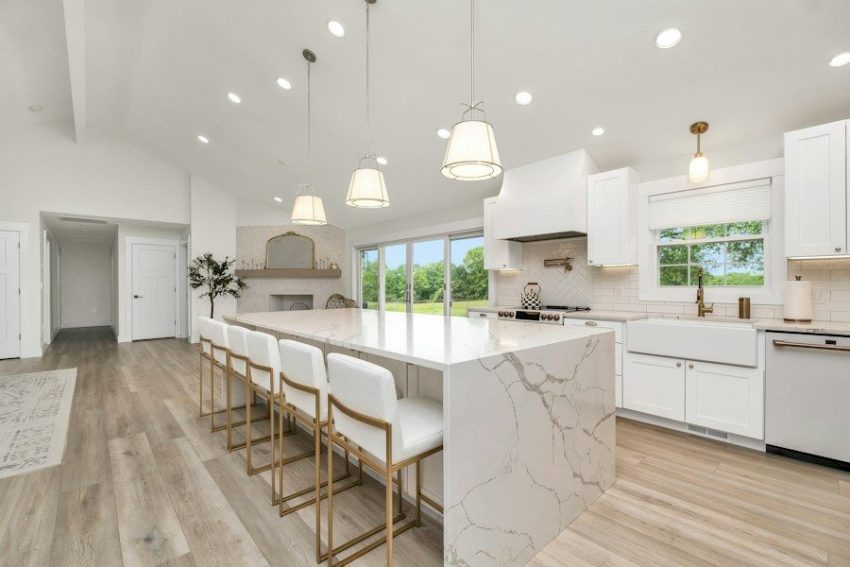
There are three real paths forward: paint them, reface them, or rip them out entirely. Each one suits a different house, a different budget, and a different tolerance for mess. Here’s how to figure out which camp you belong in.
First, Check What You’re Actually Working With
Before you pick a lane, open a cabinet door and look at the box. That carcass is the part that matters most.
Solid wood or plywood boxes with dovetailed drawers? You’ve got good bones. Cabinets built in the 1950s through the 1980s were often assembled with genuinely decent materials, and throwing them in a dumpster is a waste. Particleboard boxes that swell at the corners and shed sawdust when you touch them? Different story. Water damage under the sink is the usual culprit, and once the bottom panel has turned to oatmeal, repairs get silly.
Test the hinges too. If doors hang crooked and the screws just spin in stripped holes, that’s fixable. If the face frame itself has pulled away from the box, that’s not.
The Layout Question
Here’s the thing people forget. Paint and refacing both lock you into your existing floor plan. If your kitchen has a dishwasher wedged into a corner you can’t open, or 8 inches of dead filler where a cabinet should be, cosmetic work won’t fix that. A new layout means new cabinets. Full stop.
Option One: Paint Them
Painting is the cheapest route by a wide margin. Expect to spend $200 to $600 on materials if you do it yourself, or $2,000 to $6,000 for a professional spray finish depending on your kitchen’s size.
The catch is that painting cabinets well is genuinely hard. It’s not a weekend job. Plan on five to seven days minimum, and most of that is prep you’ll be tempted to skip.
Degrease everything. Kitchen cabinets absorb cooking oil for years. TSP substitute or a strong degreaser, then rinse.
Sand and scuff. 220 grit is usually enough to break the sheen.
Use a bonding primer. Stix or BIN shellac primer both grip slick surfaces that latex won’t touch.
Choose a cabinet-grade enamel. Benjamin Moore Advance and Sherwin-Williams Emerald Urethane both level out beautifully but need 16 hours between coats. Rushing this is how you get fingerprints in your finish in March.
Painting works brilliantly on flat-panel or simple recessed-panel doors. It works less well on heavily grained red oak, where the grain telegraphs through no matter how many coats you apply. Some people like that. Many don’t. A grain filler adds two days but solves it.
Option Two: Reface With New Doors
Refacing keeps the boxes and swaps everything you actually see. New doors, new drawer fronts, and a matching veneer or paint on the exposed face frames and end panels.
This is the option most homeowners underestimate. You get essentially a new-looking kitchen for roughly 40 to 60 percent of a full replacement, and the work takes days rather than weeks. Your sink stays connected. Your countertop stays put.
Door style is where the whole look lives. Shaker remains the safest bet in an older home because it sits comfortably between traditional and contemporary without dating itself. If your cabinet openings are odd sizes, which is almost guaranteed in a house built before 1990, made to measure shaker doors solve the problem that off-the-shelf sizing creates. Measuring carefully matters more than anything else here. Measure every opening individually. Cabinet builders were not always precise, and two doors that look identical can differ by a quarter inch.
What Refacing Won’t Fix
Sagging shelves, broken drawer glides, and a bad layout all survive the process. Budget separately for soft-close glides if the originals are the old side-mount type; it’s a cheap upgrade that changes how the kitchen feels daily.
Option Three: Replace Entirely
Full replacement costs the most and disrupts the most. Stock cabinets from a big box store run $100 to $300 per linear foot installed. Semi-custom lands between $150 and $650. Custom goes north of that quickly.
You should replace when the boxes are failing, when the layout genuinely doesn’t work, or when you’re moving plumbing and electrical anyway. Gutting a kitchen to fix a layout problem is money well spent. Gutting one because you don’t like the color is not.
Realistic timeline: four to eight weeks from demolition to a working kitchen, longer if cabinets are on backorder. Set up a temporary kitchen somewhere with a microwave and a coffee maker. You’ll need it.
Making the Call
Good boxes plus a workable layout equals paint or reface. Failing boxes or a layout that fights you equals replacement. Most older homes fall into the middle category, which is exactly why refacing has quietly become the smartest move for anyone who wants a real change without a two-month campsite in their dining room.