
How to Care for Older Floors After a Home Refresh
Fresh paint, refinished hardwood, and a few updated rooms can make an old house feel completely different. Keeping those improvements looking good takes a little care, especially when every room has its own history.
There’s something wonderful about finishing a project in an older home. The furniture is finally back in place, the tools are put away, and those hardwood floors you’ve spent so much time restoring are looking beautiful.
Then the dog comes in through the back door with muddy paws.
It’s a familiar moment, and a reminder that living in an older home comes with a few quirks. The hallway might have original oak floors, the kitchen could have tile from a renovation twenty years ago, and the mudroom may be covered in newer vinyl. Sometimes you find all three within a few steps.
Keeping everything clean doesn’t have to be complicated. But it does help to know which surfaces need a gentle touch and which can handle a more thorough wash.
Know your floors before you start cleaning
One of the first things to figure out after renovating is what finish is actually on the floor.
Original hardwood may have been waxed, oiled, or coated with polyurethane at different points in its life. Two rooms that look nearly identical can have surprisingly different care requirements.
If you’ve recently had the floors refinished, keep the name of the finish and the contractor’s cleaning instructions somewhere handy. You’ll also want to know how long the finish needs to cure. A floor can feel dry before it’s ready for normal use.
For wood flooring, the National Wood Flooring Association recommends regular dust removal, prompt spill cleanup, and avoiding wet mops and steam mops. That’s particularly important with older boards, where gaps or worn areas may allow moisture to reach places it shouldn’t.
Don’t rely on the old trick of putting a drop of water on the floor to decide whether it’s safe to wet-clean. It won’t tell you enough about the finish or what happens after repeated exposure to moisture.
When you’re unsure, a dry microfiber mop or a vacuum with an appropriate hard-floor attachment is the better starting point.
After a renovation, don’t confuse construction dust with everyday dirt
Painting the dining room and sanding old trim may happen in the same weekend, but the cleanup is different.
Ordinary household dust is one thing. Fine sanding residue, plaster particles, paint chips, and sharp construction debris are another.
A household floor washer shouldn’t be used to collect renovation debris. Certain particles can clog the wrong filtration system, while grit and sharp fragments may damage the machine or scratch a newly finished floor.
There’s also a more serious concern in older American homes.
If your house was built before 1978, disturbing painted surfaces may create lead-contaminated dust. The Environmental Protection Agency recommends appropriate containment, HEPA vacuuming, and lead-safe cleaning procedures for work involving potentially lead-based paint.
That cleanup needs to be handled with the right equipment and precautions before you return to ordinary housecleaning.
After the work area has been properly cleared, a wet dry vacuum can be useful for regular household messes on approved hard floors. These floor washers collect suitable debris while washing the surface, saving a separate vacuum-and-mop routine.
They’re not a replacement for specialized construction-cleanup equipment, though. That’s one job worth keeping separate.
The back entry deserves its own routine
In an older home, the back door is often the busiest entrance.
Groceries come through it. Kids leave their shoes nearby. The dog races in from the yard. It’s also where tiny stones and damp dirt find their way onto floors you’ve worked hard to restore.
A sturdy mat outside and an absorbent one inside make a noticeable difference. If there’s room for a boot tray, even better.
Small pieces of grit are particularly troublesome because they can scratch a floor when someone walks across them. Catching that dirt at the door is much easier than dealing with damaged finish later.
Once larger debris has been removed, a floor washer may be helpful on compatible tile or other approved hard flooring.
The Tineco FLOOR ONE S7 Stretch Ultra is one option for this kind of regular cleanup. Its lay-flat design can also help with reaching beneath low furniture on suitable floors.
Just watch the transition strips. Older homes are full of raised thresholds, uneven boards, and little changes in floor height. A cleaning head shouldn’t be forced over anything loose or protruding.
If the entry has unfinished wood or a finish you’re uncertain about, stick with a method approved for that surface instead.
The kitchen is where things get interesting
Older kitchens have a habit of showing their renovation history.
Maybe the cabinets are new, but the tile underneath has been there for decades. Or perhaps the pantry still has original wood flooring while the rest of the room was updated with vinyl.
Then there are the usual kitchen messes: crumbs around the table, water near the sink, and something sticky that nobody noticed after dinner.
For hard floors approved for wet washing, a floor washer can make the daily cleanup easier.
Tineco’s FLOOR ONE S9 Artist Pro is a premium non-steam option designed for regular hard-floor maintenance. It includes intelligent dirt sensing and automatic brush-care features.
The FLOOR ONE S9 Master takes a different approach, using hot-water cleaning technology for certain stubborn messes.
Those extra capabilities may be worth considering if you spend a lot of time cleaning compatible hard flooring. They won’t necessarily help with old, delicate tile or damaged grout.
After regrouting, for example, it’s important to follow the curing instructions before introducing water. And if a small splash lands on newly refinished wood, wiping it up promptly is usually better than reaching for a machine.
Sometimes the simplest fix is still the right one.
Getting underneath furniture without moving everything
Antique dressers, old built-ins, and heavy bedroom furniture are part of what makes an older house feel special.
They’re also very good at hiding dust.
If you have furniture that sits close to the floor, a machine’s height can matter more than its suction specifications.
One option for compatible hard flooring is the Tineco s6 (FLOOR ONE Stretch S6). Its 180-degree lay-flat design lets the machine reach into certain tight spaces, with a body height of approximately 5.1 inches when reclined.
That’s a useful feature beneath a platform bed or a low cabinet.
But a machine doesn’t fit everywhere simply because it folds flat. If your dresser has only four inches of clearance, the S6 won’t slide underneath.
Measure first, especially if the furniture has support rails or uneven legs.
While you’re checking those spaces, take a look at the furniture pads. Old felt pads can collect grit or wear through, leaving wood or metal feet in direct contact with the floor.
A quick replacement may do more to protect your restored hardwood than another cleaning accessory.
Rugs and upholstery still need a dry vacuum
Area rugs look wonderful in older homes. They soften hardwood floors, add color, and make a room feel lived in.
But they’re not meant to be washed with a hard-floor cleaning machine.
A wet/dry floor washer is designed for compatible hard surfaces, not carpet, upholstered furniture, or delicate rugs.
For those jobs, a cordless dry vacuum such as the Tineco PURE ONE Station 5 is a different option to consider. Its dust-collection station can reduce some of the handling involved in emptying the vacuum, although the equipment still needs maintenance.
Antique rugs call for extra care. Loose fringe, worn backing, and delicate fibers may require gentler cleaning than a powered brush roll can provide.
There’s also the floor underneath to think about. Lifting an area rug occasionally gives you a chance to check for trapped grit, moisture, or changes in the wood finish.
That simple habit can prevent an unpleasant surprise when you rearrange the room.
Should you use steam in an older house?
Steam cleaning sounds appealing after a renovation. After weeks of dust, paint, and projects, the idea of a thorough hot cleaning is hard to resist.
But this is where knowing your floors matters most.
The National Wood Flooring Association advises against steam mops on wood flooring. Older floors may have gaps between boards, previous repairs, or finishes that don’t tolerate heat and moisture well.
Tile can be another story, provided its manufacturer approves steam cleaning and the grout and sealant are in suitable condition.
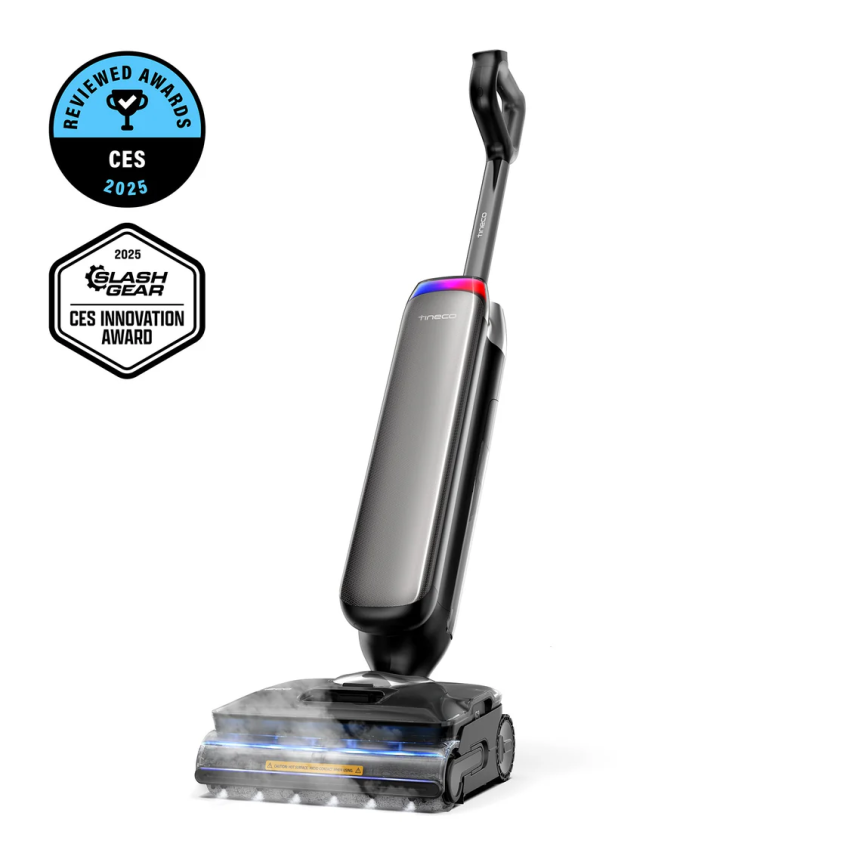
For those approved surfaces, the Tineco s7 (FLOOR ONE S7 Stretch Steam) combines wet/dry floor washing with a steam-cleaning function that may help loosen certain dried-on kitchen messes.
Another option is the Tineco s9 (FLOOR ONE S9 Artist Steam), a premium model with Tineco’s HyperSteam technology.
Both are intended for compatible hard-floor applications, but they’re not interchangeable with the non-steam S7 Stretch Ultra or S9 Artist Pro.
And they shouldn’t be treated as permission to steam-clean original hardwood.
If you can’t confirm that the flooring allows steam, there’s no reason to take the chance. It’s much easier to skip a cleaning mode than to repair a damaged finish.
A simple routine that keeps an older home looking good
The goal isn’t to spend every Saturday deep-cleaning the house.
It’s to deal with small problems before they become bigger ones.
Keep entry mats clear of grit and wipe up spills when they happen. Use a suitable dry attachment for wood floors and area rugs. Save wet washing for surfaces whose care instructions permit it.
Once a week, check the spots that are easy to ignore: underneath the dresser, around the kitchen cabinets, and along the baseboards.
Every so often, inspect those old thresholds and furniture pads. A loose strip or a worn pad can cause more damage than ordinary dust.
Your cleaning equipment needs attention as well. Empty a floor washer’s dirty-water tank after use, clean the removable parts as directed, and let everything dry properly.
One handy trick is to keep a short floor-care note inside the utility closet. Write down which rooms have wood, tile, or vinyl, along with any restrictions from the flooring manufacturer or refinisher.
That way, anyone helping with the cleaning knows which method is safe.
Thinking about an upgrade? Black Friday may be worth watching
Home improvement projects can stretch a budget pretty quickly. By the time you’ve finished painting, repairing trim, or refinishing floors, buying another appliance may not sound particularly exciting.
But if your old vacuum isn’t suited to the mix of floors in your home, Black Friday could be a good opportunity to upgrade.
Black Friday 2026 falls on November 27.
Tineco has offered substantial discounts during previous U.S. promotional events. Depending on the model and campaign, advertised savings have reached roughly $100 to $300, and sometimes more.
Those are examples of past promotional ranges, not guaranteed savings for Black Friday 2026. The actual discounts, eligible models, and availability will depend on the offers announced.
If you’re considering a purchase, it helps to decide what you need before the sale begins.
For hard floors beneath low furniture, the Stretch S6 or S7 Stretch Ultra may be worth comparing. The S9 Artist Pro is another option for more frequent hard-floor washing, while the S9 Master offers hot-water cleaning for suitable situations.
If steam is important and your flooring specifically allows it, the S7 Stretch Steam and S9 Artist Steam deserve a closer look.
And if your home has mostly rugs, carpet, and upholstered furniture, a dry vacuum such as the PURE ONE Station 5 may be the more useful investment.
Before buying, check the final discount, product availability, included accessories, and return policy. A substantial markdown is appealing, but only when the appliance fits your home.
An expensive floor repair would quickly outweigh whatever you saved during a sale.
Keep the character, protect the work
Older homes have a charm that’s hard to recreate.
The original oak floors, the slightly uneven thresholds, the old tile that somehow still looks right with the new cabinets—those details tell the story of the house.
Taking care of them doesn’t require filling the closet with the latest cleaning gadgets.
It means knowing when to keep things dry, where wet washing is appropriate, and which jobs call for something more specialized.
If a Black Friday promotion makes a useful upgrade more affordable, that’s a welcome bonus.
The important part is choosing equipment that helps preserve the home you’ve already put so much care into.
Frequently Asked Questions
Can I use a wet/dry floor washer on refinished hardwood?
Only if the flooring and finish manufacturers specifically permit that method. The National Wood Flooring Association generally recommends dry cleaning and advises against wet mops on wood flooring.
How soon can I clean newly refinished wood floors?
That depends on the finish used and its curing requirements. Follow the refinisher’s instructions rather than relying on how dry the surface feels.
Can I vacuum renovation dust in a pre-1978 home?
An ordinary household vacuum may be inappropriate, particularly when lead-contaminated dust is possible. Follow EPA lead-safe renovation guidance and use the required cleaning equipment or qualified professionals.
Is the S7 Stretch Steam the same as the S7 Stretch Ultra?
No. The S7 Stretch Steam includes a steam-cleaning function, while the S7 Stretch Ultra is a non-steam wet/dry floor washer. Their suitability depends on the flooring and the type of cleaning needed.
What’s the difference between the S9 Artist Pro and S9 Artist Steam?
The S9 Artist Pro is a premium non-steam floor washer. The S9 Artist Steam adds steam-cleaning capabilities. The latter should be considered only when the flooring manufacturer expressly allows steam.
Can Black Friday really offer substantial savings on floor-care appliances?
Previous promotions have included advertised discounts of around 100–300 or more on selected models. Black Friday prices for 2026 must still be confirmed when the offers are announced.
Sources and Further Reading
National Wood Flooring Association — Wood Floor Maintenance
Guidance for maintaining wood flooring and avoiding excess moisture.
https://woodfloors.org/maintenance/
U.S. Environmental Protection Agency — DIY Renovations and Lead-Safe Practices
Information on lead-safe renovation work and the handling of dust in older homes.
https://www.epa.gov/lead/frequent-questions-about-information-do-it-yourselfers-rrp-rule
Tineco U.S. — Wet/Dry Vacuum Collection
Product category for compatible hard-floor washing.
https://store.tineco.com/collections/wet-dry-vacuum-cleaner
Tineco U.S. — FLOOR ONE Stretch S6
Lay-flat design and technical specifications.
https://store.tineco.com/products/tineco-floor-one-stretch-s6-wet-dry-vacuum-cleaner
Tineco U.S. — FLOOR ONE S7 Stretch Steam
Steam cleaning and product features.
https://store.tineco.com/products/tineco-floor-one-s7-stretch-steam-intelligent-wet-and-dry-vacuum-cleaner
Tineco U.S. — FLOOR ONE S9 Artist Steam
HyperSteam technology and technical specifications.
https://store.tineco.com/products/tineco-floor-one-s9-artist-steam-cordless-wet-dry-vacuum-cleaner