
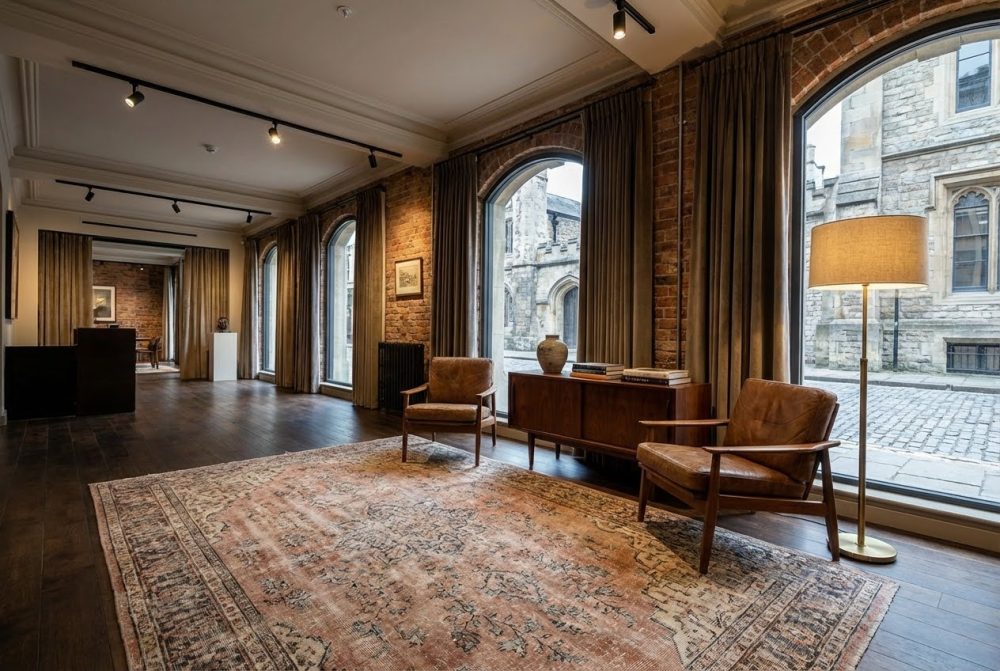
To make an old office look expensive instantly, install a technology-driven micro reception area and implement consistent branded team uniforms.
You must also apply non-destructive visual upgrades like discreet cable management and strategic ambient lighting.
These low-impact enhancements modernize the client experience without requiring structural changes that could damage historical fixtures.
There is something genuinely compelling about running a business in an older building.
The exposed brick, original hardwood floors, and tall sash windows are features that no amount of money can replicate in a modern commercial fit-out. Clients notice these elements and associate the character of the space with the character of the business inside it.
Unfortunately, the illusion breaks when they walk through the front door and encounter a poorly planned foyer.
If you operate out of a historic or vintage commercial property, you already know the tension of balancing charm with modern functionality. When seeking historic building renovation tips, focus on visual cohesion that requires zero structural changes.
For example, supplying your team with high-quality Swagprint.com’s custom apparel instantly establishes a professional standard that matches the building’s prestige. This simple upgrade sets a polished tone before visitors even reach your check-in point.
The good news is that making an older office function like a high-end environment does not require knocking down walls. This guide outlines practical moves that any small business owner can implement quickly and efficiently.
By focusing on smart reception area ideas and non-destructive styling, you can easily separate a charming old office from a truly expensive-looking one.
Build a Hardworking Micro Reception
Why the Entrance Is Vital
Research consistently finds that people form a first impression almost instantly upon entering a new space.
In fact, studies show that consistent first impressions occur within the first 39 milliseconds of an encounter. In a client-facing business, that window opens the moment someone steps through the front door.
The entrance is where professional credibility is either established or quietly undermined.
This creates a specific challenge for small business check-in processes within older buildings. Historic commercial properties were rarely designed with modern reception workflows in mind.
The foyer might be a narrow vestibule, and the closest thing to a reception desk might be an antique table that you cannot realistically staff.
Conventional reception furniture solves none of these difficult structural problems. A large reception desk requires floor space that most historic offices simply do not have available.
Furthermore, installing one often means blocking natural traffic flow or compromising the architectural character that makes the space special.
Tablet Stands Create Professional Hubs
What works in these environments is a micro reception setup. This is a minimal-footprint, technology-driven check-in point that delivers everything a full front desk handles without permanent installation.
The core tool for this approach is a freestanding tablet kiosk that requires no drilling into plaster walls or original woodwork.
Small businesses in professional environments need a check-in terminal that is secure, always powered, and built to an exacting standard.
By utilizing a commercially engineered iPad floor stand from VidaBox, you transform a standard consumer tablet into a tamper-proof reception terminal. These precision-machined enclosures provide a level of fit and finish that belongs in luxury commercial environments.
- For appointment confirmation, clients tap in and log their arrival to reduce front desk congestion.
- Digital forms and waivers effectively eliminate paper stacks that visually clutter period furniture.
- Visitor routing efficiently directs first-time guests to the correct room without needing a greeter.
- Review prompts easily capture post-visit feedback while the positive experience is still fresh.
Two engineering details matter particularly when integrating modern technology into older buildings.
Advanced Power over Ethernet solutions deliver significant charging capacity through a single cable, ensuring the tablet stays powered all day.
Additionally, zero-clearance hidden wiring designs route cables cleanly through the stand itself, eliminating floor-level visual interruptions.
Key Insight: A tablet floor stand creates a professional check-in hub without damaging historic walls or floors. It offers a high-end, tamper-proof solution that fits perfectly in tight, character-rich foyers.
Dress the Team to Match the Space
Presentation Matters in Historic Spaces
In a modern glass-and-steel office, the interior design carries much of the professional credibility. Historic buildings work differently, as client attention naturally gravitates toward the people in the room to gauge professionalism.
Experts note that body language conveys up to 55 percent of your overall message, meaning personal presentation is vital.
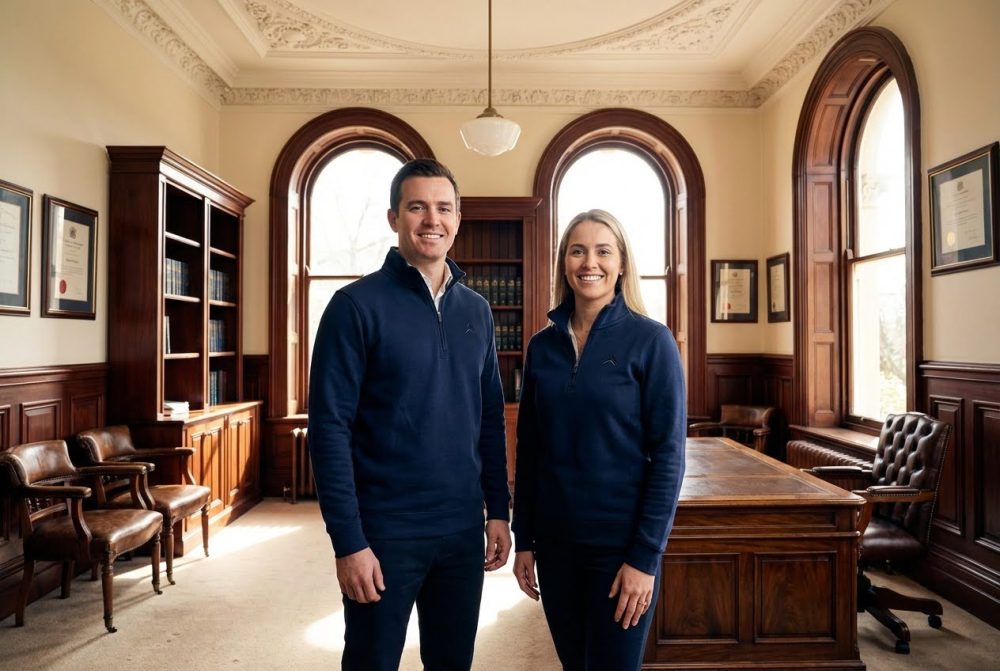
This means that inconsistent or casual staff presentation lands much harder in a character-rich space. A team member in a well-fitted branded uniform communicates that the business is deeply intentional about its image.
Furthermore, research demonstrates that individuals wearing formal clothes appear significantly more intelligent, skilled, and competent by observers.
Branded Apparel Creates Visual Cohesion
The challenge for most small businesses is implementing branded uniforms without blowing the quarterly budget. Many assume that professional customization requires large minimum orders and extremely long lead times. In practice, a small team simply needs access to role-based shirts and branded layers that suit a client-facing environment.
- Role-based shirts differentiate client-facing staff from back-office team members to remove visitor ambiguity.
- Because older buildings are notoriously drafty, branded layers keep staff warm while looking cohesive.
- Color-conscious customization is crucial; warm navies and forest greens suit Victorian interiors beautifully.
Consistent team apparel represents a wise investment that reinforces your brand identity at every client touchpoint. In a space where the team carries the weight of professional credibility, visual consistency is a distinct operational advantage.
By dressing to match the building’s standard, your staff instantly makes the entire operation feel considerably more expensive.
Pro Tip: Choose apparel colors like navy or forest green for Victorian offices, or clean neutrals for mid-century spaces. Aligning your team’s palette with the building’s era creates an effortlessly expensive, cohesive aesthetic.
Practical Upgrades That Honor Building Character
A micro reception setup and branded team presentation address the most visible dimensions of the client experience. However, you must also handle the supporting visual friction points that accumulate into an overall impression of carelessness.
The following practical upgrades are low-impact, completely reversible, and require absolutely zero structural work.
1. Discreet Cable Management
Power cables running across period flooring or original skirting boards immediately undercut an expensive aesthetic.
You can fix this quickly using cord concealers in period-appropriate colors like warm ivory or matte black. Cable clips positioned behind furniture sightlines keep necessary wiring completely hidden from clients.
2. Safe Signage Solutions
Many historic commercial properties carry strict preservation clauses regarding original plaster walls. Removable adhesive-backed signage, freestanding sign holders, and tabletop display frames cover your practical needs without causing damage.
For properties with highly unusual surfaces, tension-mounted systems offer excellent and attractive alternatives.
3. Hidden Storage Tactics
Visible clutter is the absolute fastest way to make a premium space look incredibly cheap. In small historic offices, transitioning to digital forms via a tablet kiosk significantly reduces the need for physical paper storage.
For remaining supplies, utilize closed-front furniture like vintage-style armoires that match the period to conceal operational reality.
4. Strategic Ambient Lighting
Older buildings frequently suffer from harsh overhead fluorescent retrofits that flatten gorgeous architectural character.
You can easily introduce warm, layered lighting through plug-in floor lamps and desk fixtures to avoid ceiling wiring work. This perfectly flatters the space’s original features and creates a visual warmth that signals distinct attention to detail.
5. Purposeful Zone Definition
Open or irregular historic floor plans often lack the clear zone definition found in modern corporate offices. You can visually signal intentionality simply by placing a vintage rug, two mid-century chairs, and a side table together.
This costs almost nothing, requires absolutely no installation, and tells clients exactly how to navigate the waiting room.
Warning/Important: Visible cable clutter is the fastest way to make an expensive space look cheap. Use cord concealers or zero-clearance hidden wiring to maintain a polished look without performing permanent, damaging electrical work.
Making It Happen
The core principle of making an older office look expensive is not about concealing the building’s true age. It is about ensuring that every operational signal matches the high quality of the service being delivered inside.
From how clients check in to how staff present, every little detail matters.
This framework puts that principle into direct practice without demanding a massive renovation budget. A freestanding tablet kiosk creates a professional micro reception point without touching a single original fixture.
Meanwhile, customized team apparel builds vital visual cohesion that perfectly aligns with the property’s architectural standard.
The businesses that earn a premium client perception in historic spaces treat every square foot as an intentional design decision. It simply requires clarity about what the client experience should feel like and the integration of professional tools.
Preserving a building’s original charm and upgrading the client experience are ultimately the exact same thing.