
To reclaim your garage floor without a major renovation, maximize ground space, and utilize automated overhead storage. Older homes often feature compact layouts with low ceilings and zero built-in storage planning.
According to the U.S. Census Bureau housing data, 39.3% of homes in the United States were built before 1960. This causes items to pile up along the path of least resistance until the space becomes unusable.
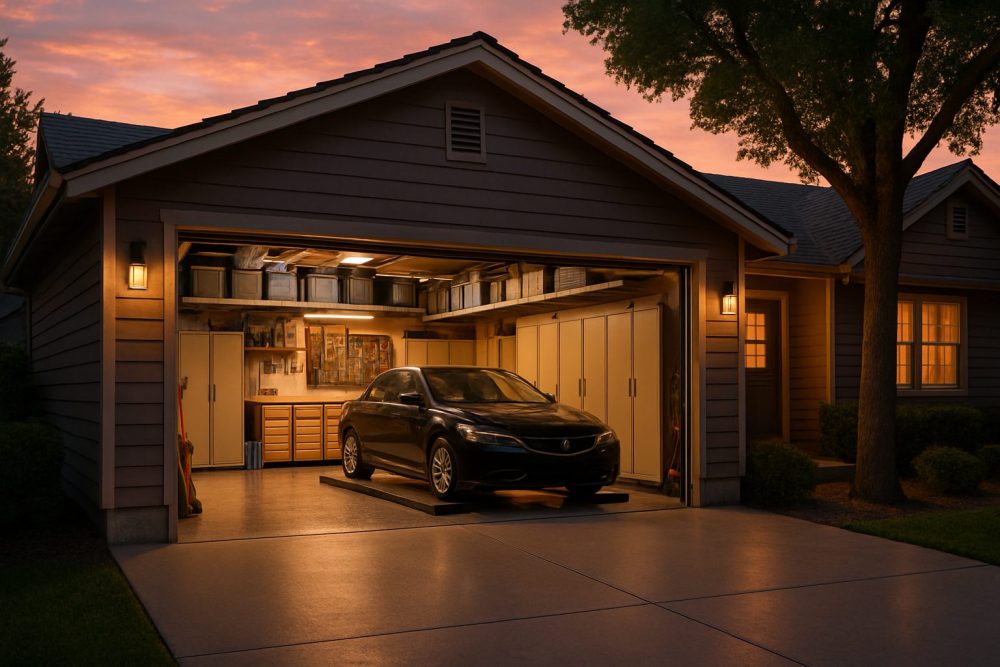
You did not mean for it to happen. One winter, the snow shovels found a corner, and by spring, the bikes migrated inside.
Now the space has quietly become a catch-all zone, making walking through it feel like a scavenger hunt. In fact, a survey by the U.S. Department of Housing and Urban Development reports that about one-third of adults report that the physical condition or size of their housing prevents them from using one or more rooms.
The good news is that you do not need a full weekend renovation to fix this. A practical game plan involves utilizing a garage lift from HeavyLift Direct, heavy-duty wall cabinets, or Inventive Garage’s attic lift to maximize your available space.
Start with one mechanical upgrade and add simple habits to keep pathways clear.
Removing the friction of storage is the secret to a tidy house. When everything has a logical home, your floor stays clear. Implementing these straightforward upgrades will permanently clear your pathways without requiring a dumpster in the driveway.
1. Reclaim the Floor First
Here is the most underrated question in an organization. If the car came back inside, what would immediately open up? A car parked on the driveway does not save floor space. It simply redistributes the clutter it left behind.
The bikes, the lumber, and the bags of potting soil all fill the space the vehicle used to occupy. Get the car back inside, and you force everything else to find a logical home.
The most practical way to achieve this in a tight space is by elevating the vehicle.
A lift raises one car off the floor, putting it safely overhead or on a raised platform. The concrete underneath instantly becomes usable real estate. You will have enough room for a workbench setup, a dedicated bike storage zone, or stacked lumber.
For older homes with standard ceiling heights, equipment selection is critical.
Two-post and four-post models work perfectly in garages with adequate clearance, while scissor options offer a lower-profile alternative.
Always measure carefully and consult local hardware experts or specialized dealers to ensure compatibility with your slab.
Pro Tip: Before purchasing a lift, measure from the floor to the lowest obstruction like a garage door rail or beam. Choosing a low-ceiling model ensures your vehicle fits safely in older, compact garages.
2. Unlock Hidden Vertical Space
Once the floor is freed up, look toward the ceiling. Most garages have significant overhead space that goes completely unused. The area above the joists and the upper wall section near the rafters can hold an enormous amount of gear.
Most people never use this zone because hauling heavy plastic totes up a wobbly ladder is risky and inconvenient. Consequently, the space sits empty while the floor fills up.
The Centers for Disease Control and Prevention warns that falls constitute the leading cause of nonfatal injuries treated in hospital emergency departments in the United States.
A motorized automated platform removes that physical friction entirely. By raising and lowering your bins and seasonal gear with the push of a button, there is no ladder or balancing act required.
Holiday decorations, camping gear, and off-season sports equipment can all live overhead safely.
This is exactly the kind of space-saving upgrade that makes the most difference in compact layouts. When researching options, compare heavy-duty shelving, basic ceiling racks, and automated systems to find what fits your layout.
Automating the process is the upgrade that actually gets used because it eliminates the effort of manual lifting.
Key Insight: Use the twice-a-year rule for overhead storage. If you access an item less than twice annually, it belongs in the attic zone. This keeps your floor space reserved for daily essentials.
3. Three Habits to Keep Tidy
The initial setup is the easy part. The hard part is not letting the area drift back to chaos over the next six months. Three simple habits make maintenance almost automatic.
Label and Zone Your Gear
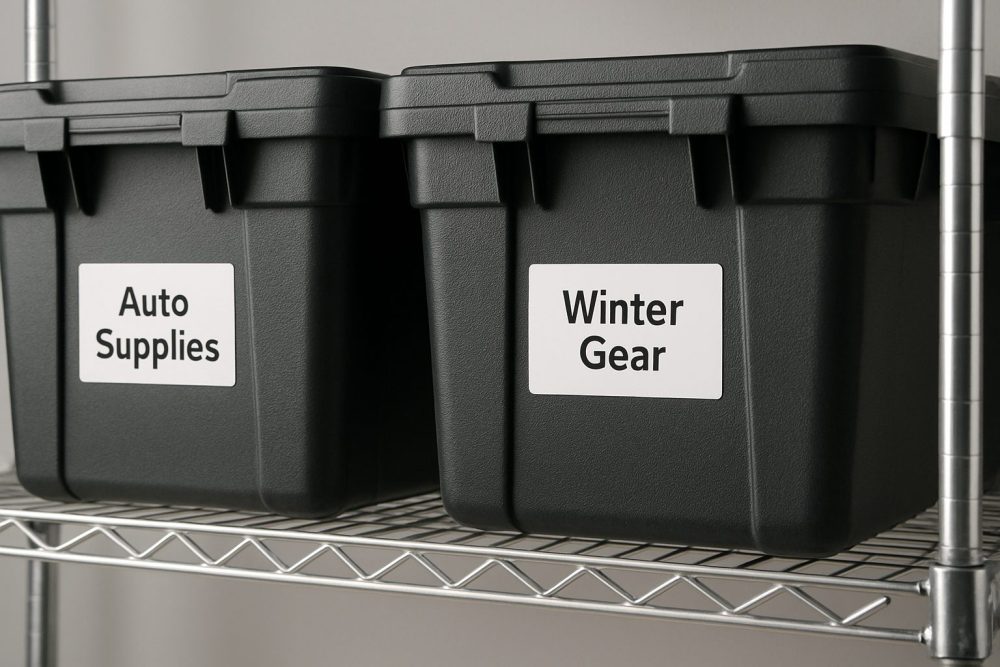
Assign named zones to your specific categories like tools, seasonal gear, auto supplies, and project materials. Use clearly marked bins so every family member knows where things belong without having to guess.
Visible text eliminates the trap of temporary parking on flat surfaces. When every zone has a name, the item in your hand either belongs somewhere specific or it needs to leave.
Rotate Items by Season
During every seasonal transition, complete a quick rotation. In May, summer gear comes down from the upper zone and takes its place at ground level.
In November, reverse the process to keep accessible storage relevant to what you are actually using. A seasonal rotation forces a brief audit, naturally catching items that no longer need to be kept.
Adopt One In One Out
Every time something new enters the area, something old leaves through donation, sale, or disposal. This is a simple decision rule rather than a chore.
It prevents slow accumulation from quietly undoing your hard work. When a new lawn tool arrives, the broken one from three summers ago goes out.
Warning/Important: Beware the temporary parking trap. Avoid leaving items on flat surfaces without a designated zone. If an object doesn’t have a labeled home, it likely doesn’t belong in your garage at all.
The Bottom Line
The garage in an older home does not have to be a messy storage room. The physical capacity is already there, waiting to be utilized. The ceiling clearance, the upper rafters, and the concrete under the car are all recoverable without tearing down walls.
The strategy is straightforward to implement and easy to maintain. Elevate the vehicle, utilize the ceiling, and establish a few simple habits.
Start by analyzing your footprint options and ceiling constraints to see what upgrades make sense.
Then, explore vertical systems to see how your specific architecture could benefit from automated overhead storage.
Your space deserves to be more than a holding zone. Pick one upgrade, build one habit, and watch what opens up.