
Cold storage is one of those business essentials you barely notice—until it’s missing. When freezer capacity gets tight, the impacts aren’t limited to “a bit of inconvenience.” They show up as rushed deliveries, stock you can’t accept, overtime to reshuffle pallets, and (in the worst cases) product loss and compliance headaches.
What’s changed in recent years is how often those “tight capacity” moments occur. Demand spikes are sharper, lead times can still be unpredictable, and many sites are carrying a broader range of SKUs than they did even five years ago. If you operate in food service, retail, manufacturing, events, pharma, or any temperature-sensitive supply chain, temporary freezer space isn’t a luxury—it’s a practical resilience tool.
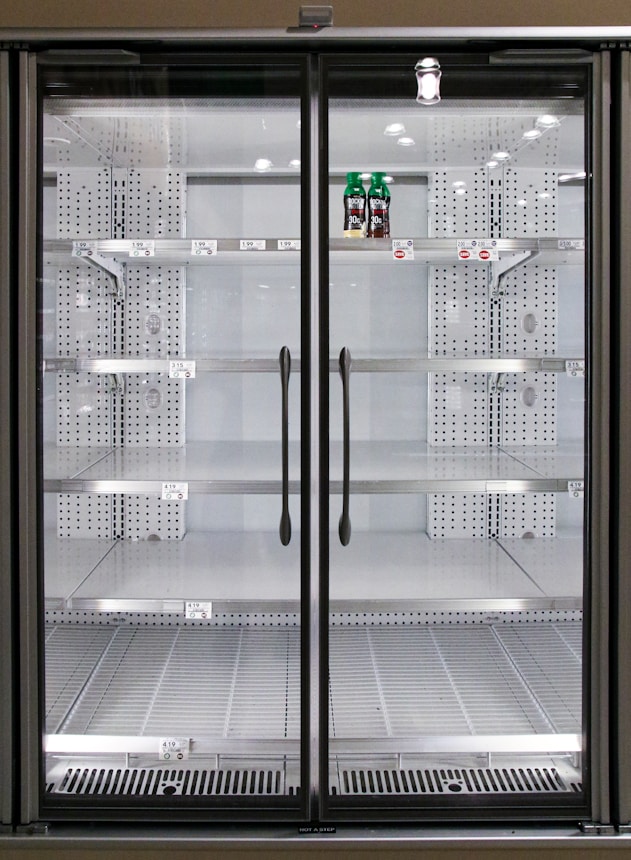
The hidden cost of “almost enough” capacity
Most businesses don’t set out to run short on freezer space. It happens gradually: a new customer here, a successful promotion there, a seasonal menu change, a bigger safety stock buffer “just in case.” Suddenly your freezer is running at 95% full on a normal week, and that last 5% is doing a lot of heavy lifting.
Peaks happen more often than you think
Seasonality is the obvious driver—summer events, Christmas trade, bank holiday volumes. But peaks aren’t just calendar-based anymore. They can be triggered by:
- a sudden price promotion that outperforms forecast
- a supply disruption that forces you to take larger deliveries when stock is available
- a change in buying behaviour (for example, bulk purchasing during local disruption)
- onboarding a new line that requires frozen storage but wasn’t in the original capacity plan
When your “normal operating level” leaves no breathing room, every peak becomes a firefight.
The operational risk of a full freezer
Running a freezer at or near maximum capacity affects more than storage. Airflow is often compromised, stock rotation becomes harder, and staff start making short-term decisions—placing pallets where they fit rather than where they should go. That’s when basic controls get tested: first-expired-first-out, allergen segregation, batch traceability, and safe access routes.
And if you’re handling high-risk or regulated goods, the stakes rise quickly. Temperature excursions can mean destroyed product, customer penalties, and reputational damage that lingers far longer than the incident itself. Even when no stock is lost, the labour cost of constantly rearranging inventory is real, and it’s rarely tracked cleanly.
Temporary freezer space as a resilience tool
If permanent capacity is expensive and slow to expand—and it often is—temporary freezer solutions provide a flexible middle ground. Think of them less as “overflow” and more as a pressure-release valve for the cold chain.
When temporary capacity is the smartest move
The most common trigger is straightforward: you need more space than usual, for a defined period, without committing to a permanent build. That could be a few weeks of seasonal uplift, a three-month contract ramp-up, or coverage during a refurbishment.
But there are other scenarios where temporary freezer space quietly solves big problems:
- Equipment failure or maintenance: If your fixed freezer goes down, you don’t just lose storage—you lose time. Having a rapid option reduces the chance that an incident becomes a crisis.
- Site constraints: Not every location can extend cold rooms easily due to planning restrictions, footprint limits, or power supply constraints.
- Project-based demand: New product launches, trial production runs, or one-off contracts often need cold storage before you can justify capital spend.
In these situations, many operators choose to hire a walk-in freezer for extra capacity so they can protect product integrity and keep the operation flowing without overcommitting. The key is treating it as part of your continuity plan, not a last-minute scramble.
Why “temporary” can be more reliable than you think
There’s sometimes an assumption that temporary equals makeshift. In practice, a well-specified temporary freezer setup can support proper access control, clear stock zoning, and stable temperature management—often with fewer compromises than squeezing more pallets into an already-maxed main freezer.
The real advantage, though, is decision-making. Temporary capacity buys you time to plan properly: to confirm whether demand is a blip or a trend, and to decide whether a permanent expansion actually makes sense.
How to plan temporary cold storage without headaches
Temporary freezer space works best when it’s planned with the same discipline as permanent storage. “Where can we put it?” is only the first question.
Start with the workflow, not the footprint
Before you think about square metres, map how stock will move:
- What products will go into the temporary space—raw materials, finished goods, or buffer stock?
- How frequently will items be picked, and by whom?
- Does it need to support pallet access, shelves, or both?
- Will you need segregation (allergens, high-risk categories, customer-dedicated stock)?
A temporary freezer that’s awkwardly located or poorly integrated can create more labour than it saves.
One practical planning checklist
Use this as a quick sense-check before you commit:
- Capacity and layout: pallets, shelving, and aisle space for safe access
- Power and siting: electrical requirements, surface level, drainage/runoff considerations
- Temperature and monitoring: target range, data logging, alarm handling, calibration expectations
- Access and security: lockable entry, traffic flow, out-of-hours procedures
- Compliance: food safety documentation, cleaning regime, pest control interface, traceability process
- Contingency: what happens if volumes rise again, or the hire period needs extending?
That last point matters more than people think. Temporary demand has a habit of becoming semi-permanent, and you’ll want flexibility if the situation evolves.
Making it pay: using flexibility strategically
Temporary freezer capacity isn’t just about avoiding disaster. Used well, it can support growth without taking on unnecessary risk. For example, you can:
- accept a new contract with confidence while you validate volumes
- reduce stockouts by holding a little more buffer during volatile supply periods
- smooth inbound deliveries so you’re not forced to refuse stock or rush cross-docking
- run seasonal lines profitably without cramming core SKUs into unsafe configurations
The best operators I’ve seen treat cold storage like a living system: forecasted, monitored, and adjusted as conditions change. If you wait until the freezer is already full, every option is more expensive—financially and operationally. If you build temporary capacity into your planning, you get control back.
Temporary freezer space matters because it protects the fundamentals: product safety, service levels, and operational calm. And in a supply chain where “normal” keeps shifting, that calm is worth more than it looks on a spreadsheet.