
The spare bedroom is cold again, and a small heater looks like the easiest fix. It might make the room more comfortable, but it also adds another appliance to run every winter. Before buying one, it’s worth finding out why that room needs extra help.

A blocked vent is a very different problem from missing insulation. You can spot some causes in a few minutes, without turning the weekend into a home renovation project.
Is the heat reaching the room?
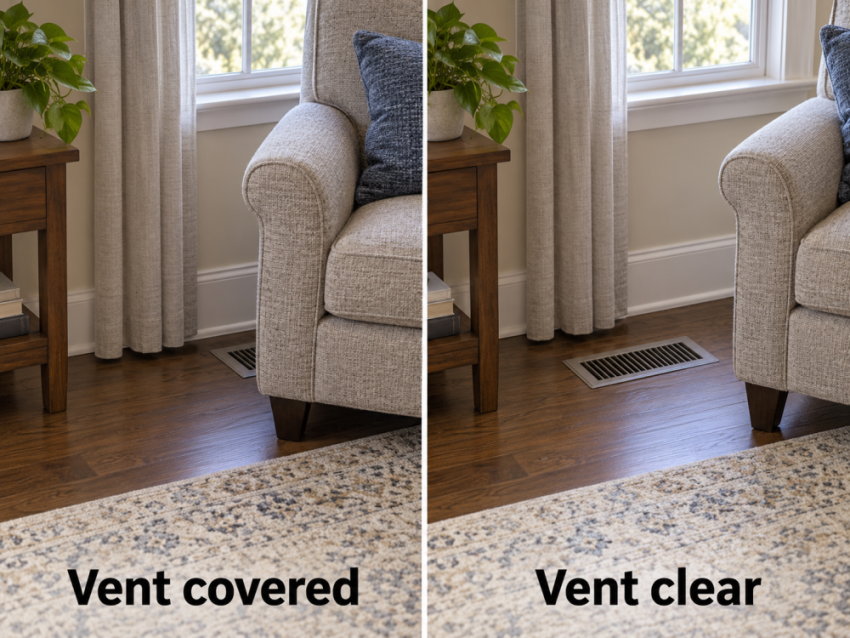
In a home with ducted heating, warm air needs a clear path into the room. A sofa over a floor vent or a curtain hanging across one can interfere with that. Return vents, which draw air back toward the system, need space too.
These are easy things to overlook after rearranging furniture. The room may have felt fine last winter, before the desk moved under the window. Looking behind it is a more useful first step than changing the thermostat.
A dirty system filter can also restrict airflow. The manual tells you which filter fits and when to check or replace it. A denser filter isn’t automatically better; the system has to be able to move air through it.
With radiators or other heating equipment, the layout still matters, but the clearances are different. Follow the guidance for that equipment rather than applying rules meant for air vents.
If the room feels noticeably better with the door open, mention that when arranging service. In some ducted systems, closing a bedroom door changes the return-air path. It doesn’t prove what’s wrong, but it gives a technician more to work with than “the room is cold.”
The draft may not be coming from the window
A gap under an exterior door can make a nearby room uncomfortable. Worn weatherstripping around the opening is another common place to look, especially if the door no longer closes tightly against it.
Air can also escape through less visible gaps around an attic hatch or where pipes and wires pass through the building. Insulation slows heat transfer; it doesn’t necessarily stop air moving through an opening. Adding more insulation without addressing leaks may leave part of the problem untouched.
That doesn’t mean every opening should be sealed. Purpose-built vents and drainage openings have a job to do. Larger air-sealing work, especially around fuel-burning equipment, needs proper attention to ventilation.
When the cold area is hard to locate
Sometimes the room is chilly even though the vents are clear and the doors fit. A thermal camera can show temperature differences across accessible walls and ceilings, helping you see whether one small area stands out.
An attachment such as the Rision Thermal camera for Smartphone lets a compatible phone display that pattern. For example, a cool patch near the ceiling may draw attention to an area you wouldn’t have thought to examine from floor level.
The picture shows surface temperatures, not what’s inside the wall. Sunlight, materials and air movement can produce different patterns, so an unusual patch needs further checking before anyone removes plaster or orders insulation.
You don’t need to buy equipment to investigate one room. If the cause remains unclear, a home energy assessor can decide whether thermal imaging or an air-leakage test would help.
Let the problem decide who you call
Weak airflow at one vent belongs in a conversation with a heating technician. If the heating works but the room stays cold, insulation and air leakage may need a closer look. Visible damp or water staining needs its own investigation, not just more heat.
An obvious obstruction is worth dealing with first. Move the furniture, let the heating run normally, and see whether the room improves before making another change. That makes it easier to tell what actually helped.
If you do need professional help, a simple description is enough: which room is uncomfortable, when it happens, and whether the rest of the house feels normal. There’s no need to arrive with your own diagnosis. The aim is to fix the reason that room needs extra heat, rather than keep paying to compensate for it.