
Most of us picture a leak as a hole somewhere in the middle of the roof. That is rarely where the water gets in. It gets in at the seams, where the roof runs into a wall, a chimney, a porch roof or the trim above a window. An older house has far more of those seams than a new build, because every addition and every dormer added another one.
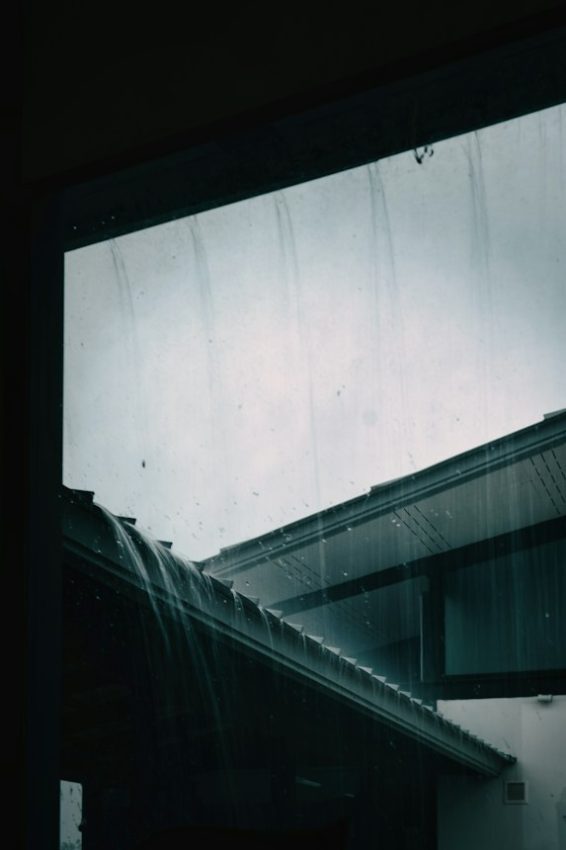
Those same seams sit between trades. Roofing, siding, windows, trim, gutters and insulation usually arrive as separate quotes from separate crews. Across New Hampshire, Massachusetts and Southern Maine, Pine & Harbor handles roofing, siding and exterior envelope work on the same building. One company standing on both sides of a seam has nobody to hand the problem to.
Why Does Water Get In at a Junction?
A field of shingles is one pattern repeated a few thousand times. Each course laps the one below by about 5 inches, and gravity does the rest. It is hard to get wrong and easy to inspect.
A junction is custom work. Metal has to be cut, bent and layered so that every piece drains onto the piece below it. Get one lap backwards and you have built a funnel pointing into the house. Water only needs a single reversed overlap to travel the wrong way.
Order matters as much as material. Step flashing goes in course by course as the roof rises, tucked under the shingle above and behind the wall covering. Nobody can add it properly afterward without taking something apart.
Which Junctions Fail Most Often On an Older House?
The same short list turns up again and again on houses built before the 1960s.
- Roof-to-wall lines, where a lower roof runs into a taller wall above it.
- Chimney sides, which need step flashing plus a counterflashing let into the masonry joint.
- Valleys, where two slopes send their water into one narrow channel.
- Dormer cheeks, small in area and fiddly to detail correctly.
- Porch and addition roofs, often tied into the main house decades later.
- Window heads and eaves, where trim, drip edge and gutter all meet at once.
Preservation guidance on old-house roofing treats flashing and small leaks as maintenance items rather than reasons to replace a whole roof. That is worth remembering when a quote jumps straight to a full tear-off. It also explains why a careful window replacement in an older home spends most of its effort on the head and sill details.
What Actually Causes an Ice Dam?
Not the gutter. A dam forms because part of the roof is warmer than the eave. Snow melts up high, runs down, and freezes again where the deck is cold. Water then backs up behind the ice and finds the nearest lap.
Research on ice dams puts the cause in three places: heat loss through the ceiling, air leaking into the attic, and thin insulation right above the exterior wall. That last spot is the roof-to-wall junction again, seen from inside. Northern codes commonly ask for an ice barrier membrane running from the eave to a point at least 24 inches inside the wall line.
Retrofit insulation can make things better or worse. Piling material into the eaves without a baffle blocks the vent path, and a rule of thumb keeps about 2 inches of clear air above the insulation. Attic targets of R-49 to R-60 only work when air sealing comes first, which is one of the common insulation mistakes in an old house worth avoiding.
How Does a Leak End Up With No Owner?
Here is the pattern homeowners describe most often. A roof gets replaced, the stain comes back in March, and everyone points somewhere else. The roofer says the water came in above the roof line. The siding crew says their scope started at the wall.
Both can be telling the truth. Water entering at a wall above a roof is a junction problem, and the junction belonged to whoever worked there last. Three or four separate contracts can cover 100 percent of a house and still leave a 6 foot line of metal unclaimed.
Caulk is the usual symptom of that gap. A bead of sealant across a joint that should have been flashed may hold for 2 or 3 winters. Then it shrinks, and the leak returns with a longer history behind it.
How Do You Plan Work Across a Junction?
You do not need trade knowledge to close the gap. You need the scope written where the materials change hands.
- Ask directly whose price includes the flashing, before anything is signed.
- Have the roof and the wall above it looked at in one visit, which free estimates and inspections make easy to arrange.
- Sequence siding and roofing so the metal goes in during the right pass, not after.
- Treat added insulation as a roof question as well as a comfort question.
- Photograph every transition while it is open, then keep the pictures.
- Walk the perimeter twice a year, in late spring and early fall.
What to Keep In Mind About Exterior Junctions
- Leaks concentrate at transitions, not in the open field of a roof.
- Every addition, dormer and porch on an old house added more transitions.
- Ice dams come from heat and air leakage, not from the gutters.
- Flashing has to be installed in order, so it cannot be added later from outside.
- One party covering both sides of a joint removes the finger-pointing.
Treating the Exterior as One Assembly
Your roof, walls, windows and gutters are not four projects that happen to touch. They are one water-shedding assembly with a few dozen handoffs in it. Spend your attention on the handoffs, ask who owns each one, and the house stays dry through a New England winter.
FAQ
Why Does My Roof Still Leak After a Replacement?
The water is probably not entering the roof field. Check the wall above the roof, the chimney sides and any valley. New shingles cannot fix flashing that was never rebuilt.
Do Gutters Cause Ice Dams?
No, though a blocked gutter makes the mess worse. Dams form when a warm roof melts snow that refreezes at a cold eave. Air sealing and insulation address the cause.
Who Is Responsible for Flashing Where Siding Meets a Roof?
Whoever your contract says, which is why it needs saying. Ask both crews to confirm in writing that the transition is inside their scope. A single contractor covering both trades avoids the question.
Does an Addition Make an Old House Leak More?
Often, yes. An addition creates new roof-to-wall lines, new valleys and a joint between old and new framing. Those are the places to inspect first after heavy rain.