
Picture a small cottage. A garden out back. Bread rising on the counter. A basket of mending by the window. That’s cottagecore. Not a formula. A mood. And it works almost anywhere, whether that’s a farmhouse in Vermont, a bungalow in Austin, or a one bedroom apartment in Brooklyn.
Touch matters here. Linen, wool, worn wood. Handmade things matter, because they took time. And nothing should look too matched or too polished. The patterns give it away every time. Florals. Gingham. Toile. Lace. Mix them. Layer them. Let them argue a little.
The hashtag landed around 2018. The feeling is older. The Arts and Crafts movement did it a century ago, against industrial mass production. The back to the land movement of the 1970s did it too. Cottagecore is the same instinct, just with a new name and a gingham curtain.
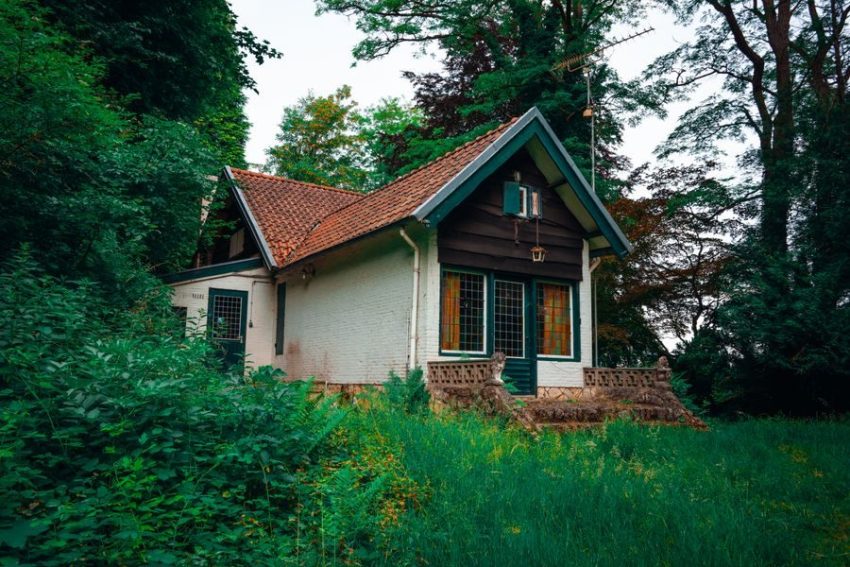
Then the pandemic hit. People stayed home, in cities and suburbs and small towns alike. Cozy mattered everywhere at once. Bread baking surged. Houseplants surged. Cottagecore gave that moment a look, and social media made it spread fast. One thrifted teacup. One windowsill garden. No renovation required.
Cottagecore Wallpaper and Paint Ideas
For those ready to make a permanent statement, wallpaper remains one of the fastest routes into a cottagecore look. Seek out small repeating florals, soft gingham checks, and the kind of muted vintage prints that look inherited rather than ordered. A dusty rose on sage green. A faded amethyst check. These patterns do the heavy lifting without requiring an actual antique.
For something less permanent, paint offers a gentler entry point. The rule here is softness in saturation rather than restraint in color. Almost any hue works, as long as it leans gentle rather than bold. A hand painted motif or a reusable stencil adds pattern without the full wallpaper commitment, with stencils offering the bonus of consistency across multiple rooms.
Renter Friendly Cottagecore Decor
If the walls aren’t yours to alter, take heart. Cottagecore charm has very little to do with what’s permanent and everything to do with what’s layered in. Here’s a simple sequence to build the look gradually, room by room. Start with one fabric matted frame. Use a thrifted frame and a scrap of gingham or floral fabric, traced and glued to the mat. The result reads as intentional texture for almost no cost.
Build outward into a small gallery wall. Mix a few mismatched frames with the fabric mats from your first project and arrange them loosely using removable hooks. No nail holes, no conversation with the landlord.
Add a single woven basket, hung on the wall or tucked into a corner. It earns its place through both function and texture and is reliably inexpensive secondhand. Layer in textiles. A quilt draped over a couch back, a lace runner, a few gingham or floral pillows that don’t quite match. This is the step where a room stops looking decorated and starts feeling lived in.
Where to Find Cottagecore Fabric on a Budget
Skip the fabric by the yard search at thrift stores and look instead for old pillowcases, vintage tablecloths, and cloth napkins, which can be cut apart into several smaller projects. One $3 tablecloth can easily become four distinct pieces. Remnant bins at fabric retailers like Joann or Hobby Lobby are consistently underrated, often just two to five dollars a yard for small cuts more than sufficient for a frame mat or pillow cover.
Clearance sections from online fabric outlets and remnant sales from sites like Spoonflower round out the search, especially for small floral or gingham prints. Even old clothing counts. A vintage floral blouse or a gingham shirt from the thrift store works just as well as fabric bought specifically for the project. A good rule to keep: buy only what genuinely moves you, finish that project, then go back for more later. This keeps the room feeling like a slow collection rather than a single shopping spree.
The Real Material Is Patience
The most important ingredient in cottagecore decor has nothing to do with fabric or paint. It’s time. This isn’t a room assembled in one weekend or ordered in bulk from a single site. It accumulates the way memory does, one piece at a time. A chipped teacup. An inherited quilt. A pillow someone actually stitched by hand. That slow build is exactly how the original cottages that inspired this whole aesthetic came together, long before anyone gave it a name.
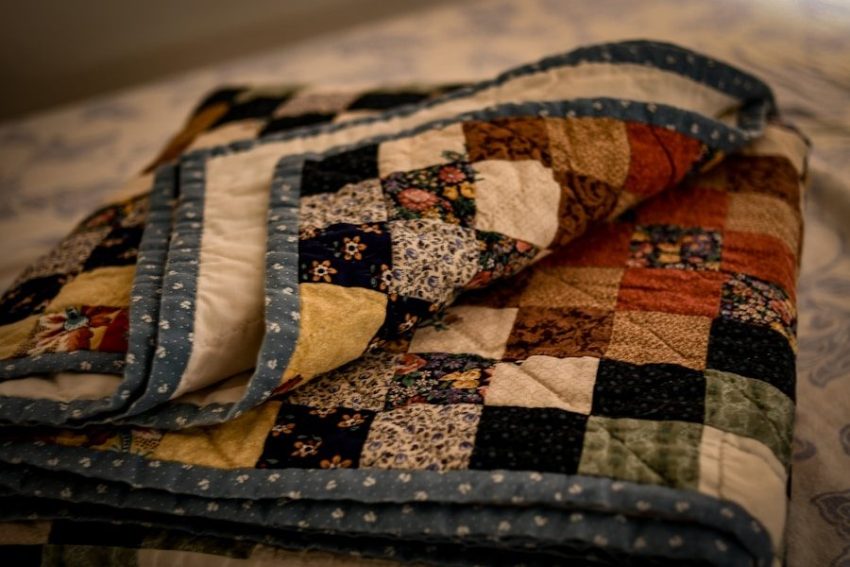
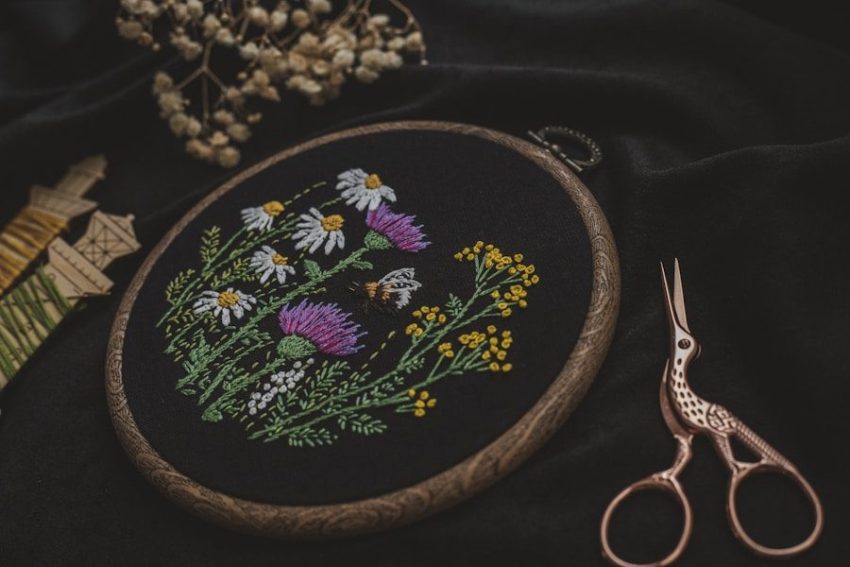
Buy the piece because you love it, not because it matches. Hang the embroidery even when its frame disagrees with the room. The slight imperfection isn’t a flaw. It’s part of how the whole look comes together.
A Brief History of Cottagecore Style
Cottagecore borrows from several eras at once: the eclectic layering of 1960s interiors, the worn comfort of 90s shabby chic, and further back, Marie Antoinette’s Hameau de la Reine, the rustic hamlet she built at Versailles as an escape into an idealized version of country life. It isn’t new. It resurfaces periodically, reinterpreted slightly each time it returns.
Mixing Patterns and Textures in Cottagecore Rooms
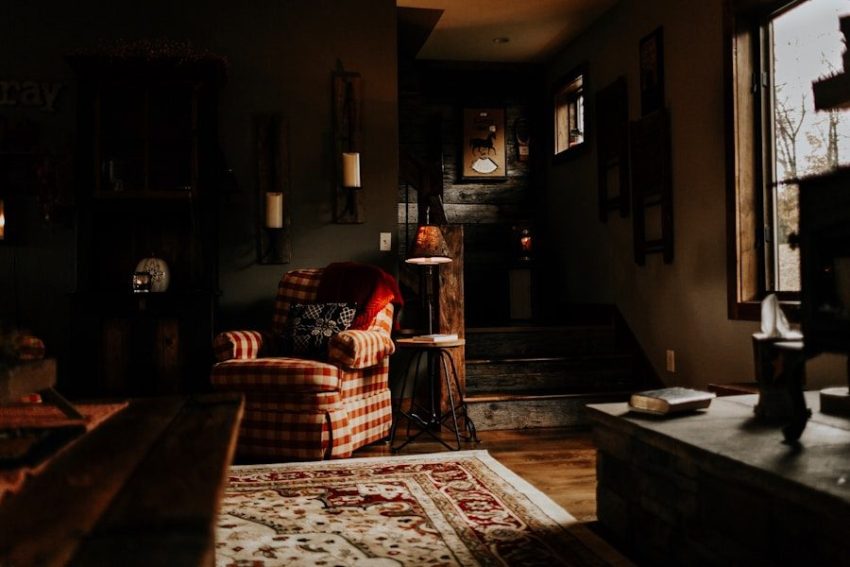
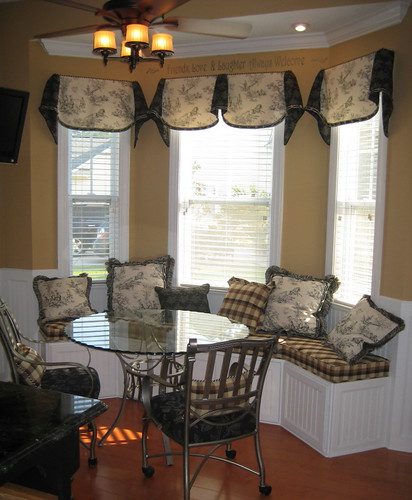
Plenty of design approaches favor restraint, choosing one pattern and letting it govern the room. Cottagecore takes the opposite approach, leaning into layers of pattern until a space reads as collected rather than coordinated. This applies across nearly every textile surface, including pillows, curtains, upholstery, and table runners. Keep an eye out for these classic cottagecore patterns:
- Florals
- Gingham
- Toile
- Quilting
- Embroidery
- Plaid
- Ruffles
- Lace
Texture deserves just as much attention as pattern. Try an overstuffed couch beneath a handmade quilt, a lace runner against raw wood, or smooth ceramic beside rough linen and a soft knit throw. Abundance reads as authenticity in this particular style.
Cottagecore Room by Room
The principles stay the same in every room, but each space has its own personality once you start layering them in.
The Kitchen
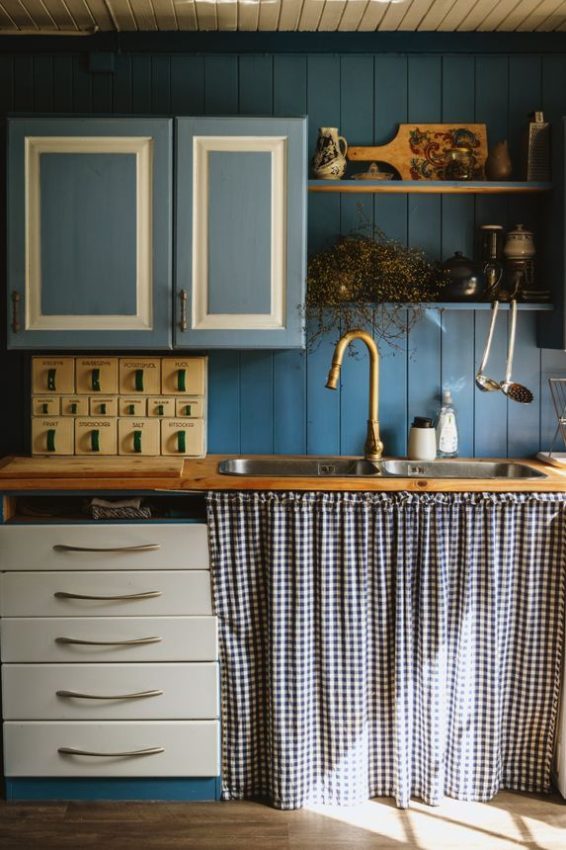
This is usually where cottagecore shows up first, and for good reason. Open shelving does more work here than closed cabinets ever could. Stack mismatched vintage plates instead of a matching set, and let a few chipped edges show. Hang dried herbs, lavender, rosemary, whatever you can get your hands on, upside down from a exposed beam or a simple hook near a window, where the afternoon light catches them.
Swap a plain dish towel for one with a faded floral or gingham print, and keep a few glass jars on the counter filled with flour, sugar, or dried beans instead of tucking everything into a pantry. A wooden bread board leaned against the backsplash, a chipped enamel pitcher holding wooden spoons, a windowsill crowded with small potted herbs above the sink. None of it needs to be expensive. Most of it can come from a single thrift store trip.
If you bake even occasionally, let the evidence show. A cooling rack left out, a rolling pin hung on the wall, a stack of well worn cookbooks on the counter. The kitchen should look like it’s used, not staged.
The Bedroom
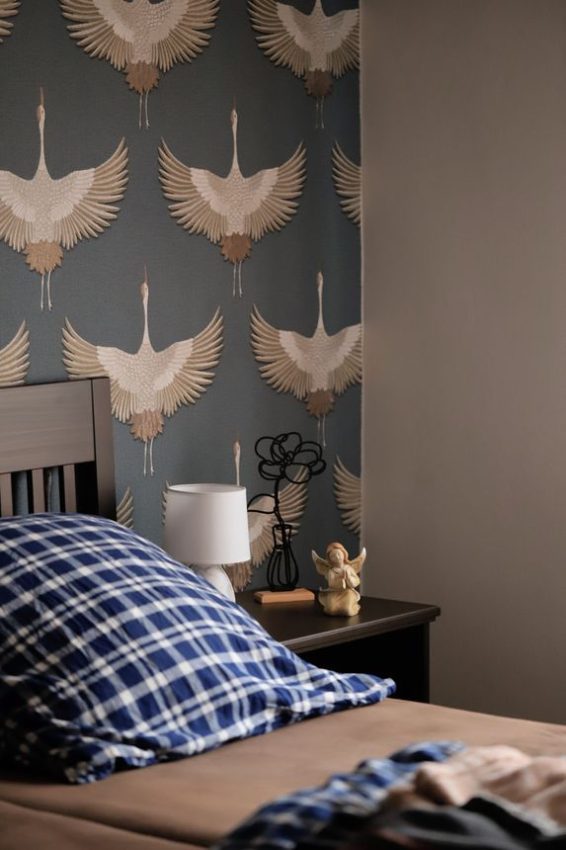
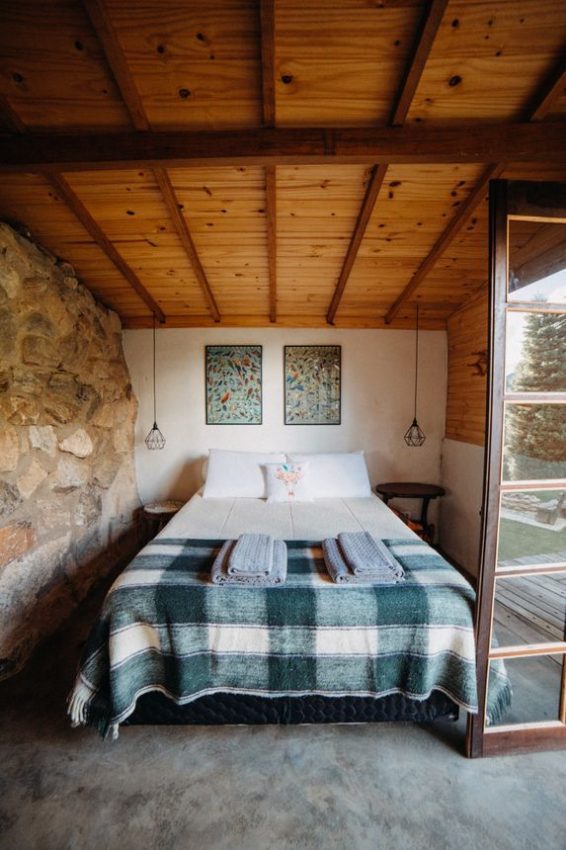
The bedroom is where texture does the heavy lifting. Start with a quilt, ideally one that’s a little worn, folded at the foot of the bed or draped over a wooden chair in the corner. Layer a lace edged pillowcase against a plainer linen one, and let the linens be slightly mismatched rather than a coordinated set.
Curtains matter more here than almost anywhere else in the house. Go with linen or cotton in a soft floral or gingham, something with enough weight to move gently when a window is cracked open. A small bedside table holding a brass candlestick, a stack of secondhand books, and a chipped teacup repurposed as a catch all for rings or hair pins rounds out the look without trying too hard.
If there’s room, a wicker chair in the corner with a knitted throw draped over the arm becomes a quiet little reading nook, even if no one reads there every day. A pressed flower in a small frame on the nightstand, a string of dried lavender hung near the headboard. These are the kinds of details that make a bedroom feel like it’s been lived in for years.
The Bathroom
Bathrooms are often the most overlooked room for this look, but a few changes go a long way in a small space. Swap plastic bottles for glass apothecary jars to hold cotton balls, soap, or bath salts. A wooden bath mat or a woven one in a natural fiber feels more in keeping with the aesthetic than anything synthetic.
A single dried floral arrangement on the edge of the sink or windowsill, a small vintage mirror with a slightly worn frame, a linen hand towel instead of a plain cotton one. If there’s a tub, a wire basket holding rolled towels or a few bars of handmade soap adds warmth without adding clutter.
Even small touches, like a ceramic soap dish picked up secondhand or a brass tap that’s slightly tarnished rather than polished to a shine, push the room further into cottagecore territory without requiring a renovation.
The Living Room
This is usually the room with the most square footage to work with, and it rewards a slightly bolder hand. An overstuffed couch under a handmade quilt, a coffee table with a lace runner beneath a stack of well loved books, a basket of yarn or knitting left out as if someone just stepped away from it.
Layer rugs rather than choosing one. A thin, faded vintage rug over a larger jute or sisal one adds texture underfoot and looks collected rather than purchased as a set. A reading chair near a window, ideally one that gets good natural light, paired with a small side table holding a brass lamp and a stack of paperbacks.
If there’s a fireplace, let it be the room’s anchor. A mantel lined with candlesticks of different heights and finishes, a few dried flower stems in an old glass bottle, maybe a small framed piece of embroidery leaned against the wall rather than hung. If there’s no fireplace, a floating shelf styled the same way creates the same effect.
The Entryway
Even a small entry can carry the look. A wooden bench or vintage stool for taking off shoes, a woven basket nearby for mail or scarves, a row of mismatched hooks instead of a single modern coat rack. A small vase of whatever’s in season, wildflowers in summer, a few dried stems in winter, sets the tone for the whole house the moment someone walks in.
Cottagecore was never really about a finished look. It’s about letting a home fill in slowly, one honest piece at a time.